

Coffee Packaging Redesign Case Study: How BioPouches Improved a US Coffee Brand & Pouch
A Confidential Coffee Packaging Project
BioPouches worked with this customer to improve both the visual design and the physical packaging of its existing coffee pouch. This case study documents that packaging-development project: what the customer had before, what they wanted to change, what BioPouches did, and what the resulting pouch was like.
The Packaging Before the Redesign
The customer already had an existing printed coffee pouch in use before approaching BioPouches. The packaging was functional, but the customer wanted the package to better represent the product and improve the overall packaging presentation.
This project was not a response to a packaging failure. It was a packaging-improvement request from a brand that wanted a stronger presentation and a pouch that better matched how it wanted its coffee to be perceived.
What the Customer Wanted to Improve
The customer's objectives covered both the visual design of the packaging and the physical pouch itself:
| Area | Customer objective |
|---|---|
| Visual presentation | Create a stronger coffee-focused appearance |
| Design | Improve hierarchy and overall presentation |
| Pouch | Improve the physical package |
| Coffee functionality | Use appropriate coffee-pouch features based on project requirements |
| Production | Produce the approved packaging consistently |
Treating these as connected requirements, rather than a design task and a manufacturing task handled separately, shaped how BioPouches approached the project.
How BioPouches Approached the Project
BioPouches worked on the packaging as a complete package rather than treating artwork and pouch manufacturing as unrelated tasks. The process began with reviewing the customer's existing pouch and understanding specifically what the customer wanted changed, both in how the package looked and in how it functioned as a coffee pouch.
From there, the project moved into developing a more coffee-specific visual direction alongside evaluating the pouch requirements needed to support that design and the product itself. Once a direction was agreed with the customer, the packaging was prepared for production and the resulting package was reviewed before finalizing the project.
Approaching the redesign this way meant design decisions, like layout and color, were made with an awareness of how the finished pouch would actually be produced and printed, rather than a design being created in isolation and handed off afterward.
Design Direction
The new visual direction uses stronger coffee-related visual cues, including coffee-oriented colors and coffee bean imagery, aimed at giving the package a clearer, more recognizable coffee-packaging appearance. Information hierarchy was also part of the redesign, organizing the pouch's design elements so the product presentation is clearer at a glance.
Why Coffee Packaging Is More Than Artwork
Roasted coffee packaging involves considerations beyond how the pouch looks. Depending on the project, this can include aroma protection, environmental exposure, closure and degassing, since roasted coffee continues to release gas after roasting and can be affected by oxygen and moisture exposure over time.
BioPouches manufactures coffee pouches with options such as one-way degassing valves and resealable closures, depending on the specific project's requirements. Not every BioPouches coffee pouch includes these features, whether a given project uses a valve, a specific closure, or a particular material structure depends on that project's own requirements, and this case study does not extend those options as a blanket description of every coffee pouch BioPouches produces.
Before-and-After Packaging Visualization
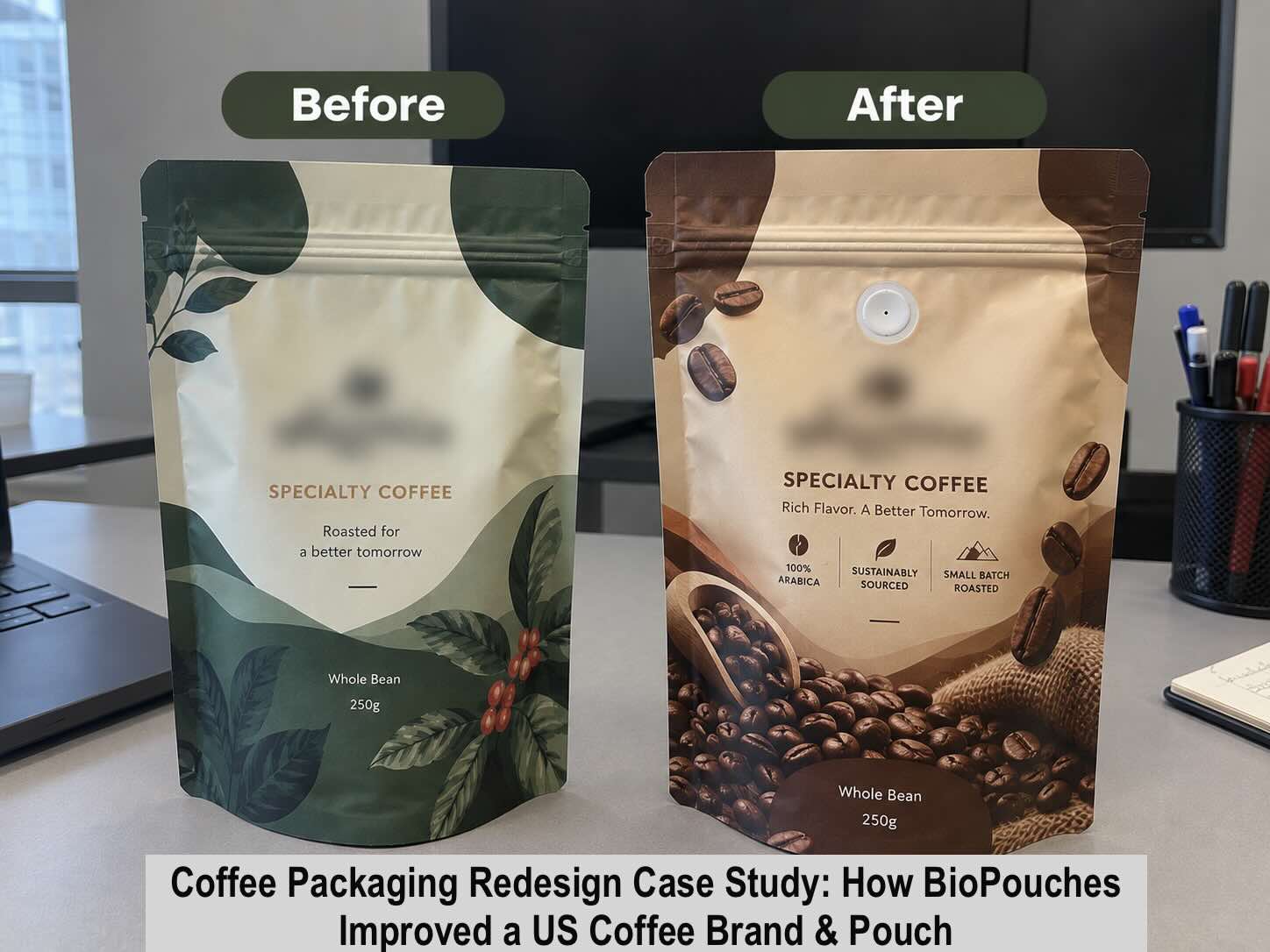
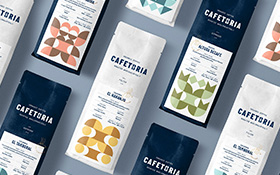
Before-and-after packaging visualization. Customer identifying information has been concealed for confidentiality; visual presentation is used to illustrate the packaging redesign.
The Resulting Coffee Pouch
The project resulted in a redesigned coffee pouch with a more coffee-focused visual identity and an updated packaging presentation based on the customer's requirements. The redesign addressed both the visual direction the customer wanted and the physical packaging changes needed to support it.
What Other Coffee Brands Can Learn From This Project
When evaluating a coffee pouch redesign, brands generally benefit from considering the physical packaging and the visual design together rather than treating them as separate projects. Points worth working through before starting a redesign include:
Pouch format
Material requirements
Coffee protection requirements
Degassing valve requirements
Closure
Dimensions
Printing
Artwork
Filling process
Order quantity
Working through these alongside the visual direction, rather than finalizing artwork first and fitting it to a pouch afterward, is part of what shaped how this project was handled.
BioPouches acted as the custom flexible packaging manufacturer responsible for this project, covering both the pouch development and the production of the approved design.
Case Study Fact Box
Customer: US-based coffee business
Customer identity: Confidential at customer's request
Packaging category: Coffee packaging
Project scope: Pouch and visual packaging improvement
Manufacturer: BioPouches
FAQ
Can BioPouches redesign an existing coffee pouch?
Yes. BioPouches works with coffee brands to redesign existing coffee pouches, addressing both the visual design and the physical packaging as part of the same project, as documented in this case study.
Can BioPouches manufacture custom printed coffee bags?
Yes. BioPouches manufactures custom printed coffee bags, developing the visual design alongside the pouch format and production requirements for each project.
Can coffee pouches include a degassing valve?
Yes, depending on the project. BioPouches offers one-way degassing valves and resealable closures as options for coffee pouches where the project requires them, though not every coffee pouch BioPouches produces includes these features.
Can BioPouches work with confidential packaging projects?
Yes. This case study documents a project completed for a US-based coffee business that requested its brand identity not be disclosed publicly, and identifying details have been withheld accordingly.
What should a coffee brand consider when redesigning a pouch?
A coffee brand should consider pouch format, material requirements, coffee protection needs, degassing valve requirements, closure, dimensions, printing, artwork, filling process and order quantity together, rather than finalizing the visual design separately from the physical packaging.
Flexible Packaging Expert at BioPouches
Asad Manan has over 6 years of hands-on experience in flexible packaging at BioPouches. He specializes in beauty product, Coffee, Food-Snacks, and health products packaging solutions that protect sensitive formulas and extend shelf life. With strong content writing skills, he creates practical guides to help brands choose the right packaging for stability, hygiene, and sustainability.
Latest News