





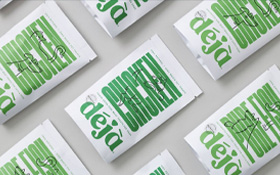

Flexible Packaging Film Lamination: Process, Materials and Common Defects
Most flexible pouches are not made from one film. They are made from two, three or more films bonded together, because no single material does every job a pouch needs to do. One layer carries the print and gives the pouch its surface. Another keeps out oxygen or moisture. Another adds strength or puncture resistance. The inner layer has to melt and seal cleanly when the pouch is closed. Flexible packaging film lamination is the process that joins those layers into one material.
Which layers go into a structure depends on what is being packed. Roasted coffee, dry pet food, powders and snacks all ask different things of the film. In this article we follow the material through our factory in the order it actually moves: material selection, printing, lamination, curing, inspection and conversion into pouches. If you want to see the rest of the production floor, our BioPouches factory tour shows printing, lamination, sealing, testing and packing in photographs.
MATERIAL SELECTION
Raw Film Materials Used in Flexible Packaging Lamination
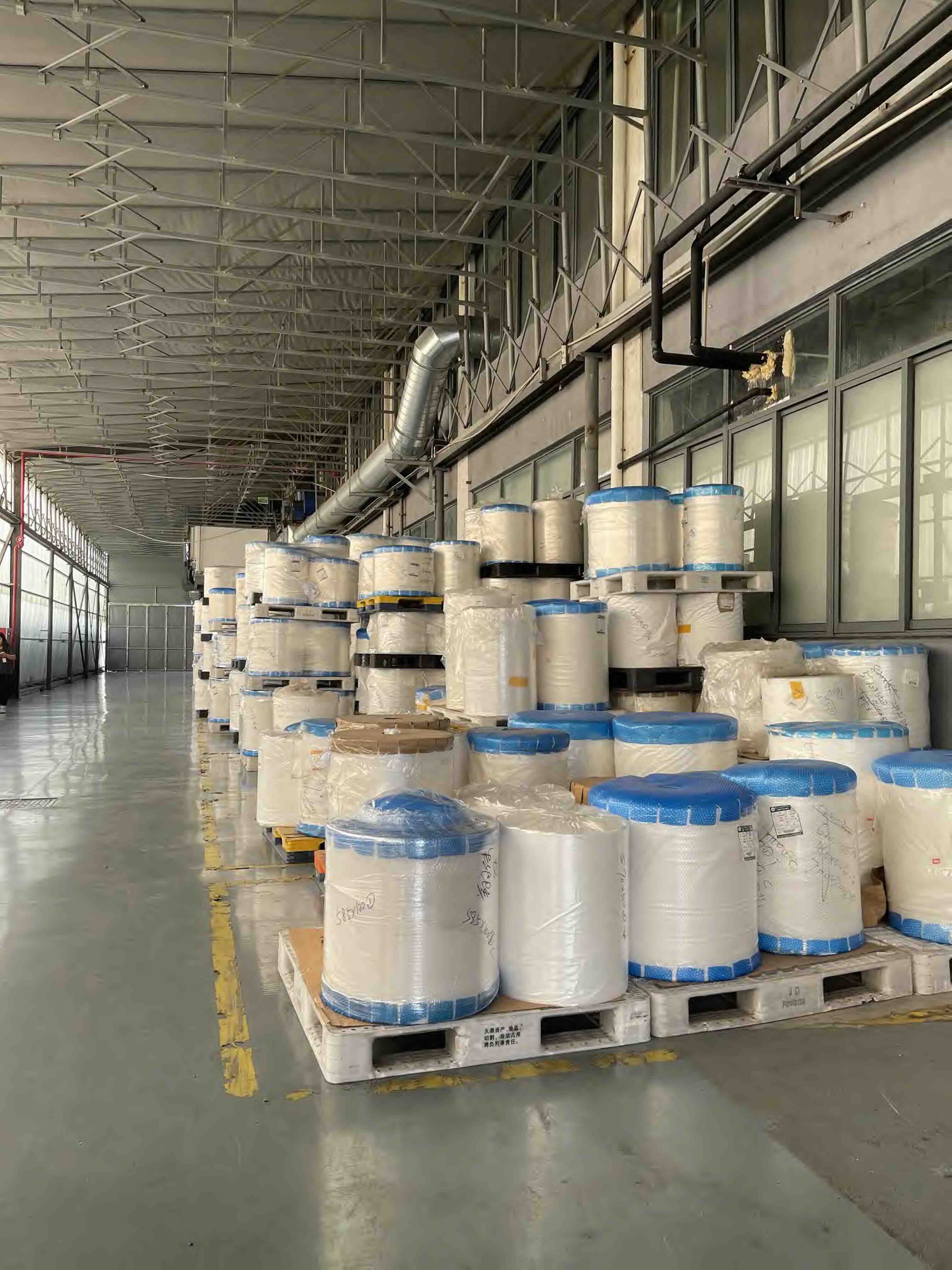
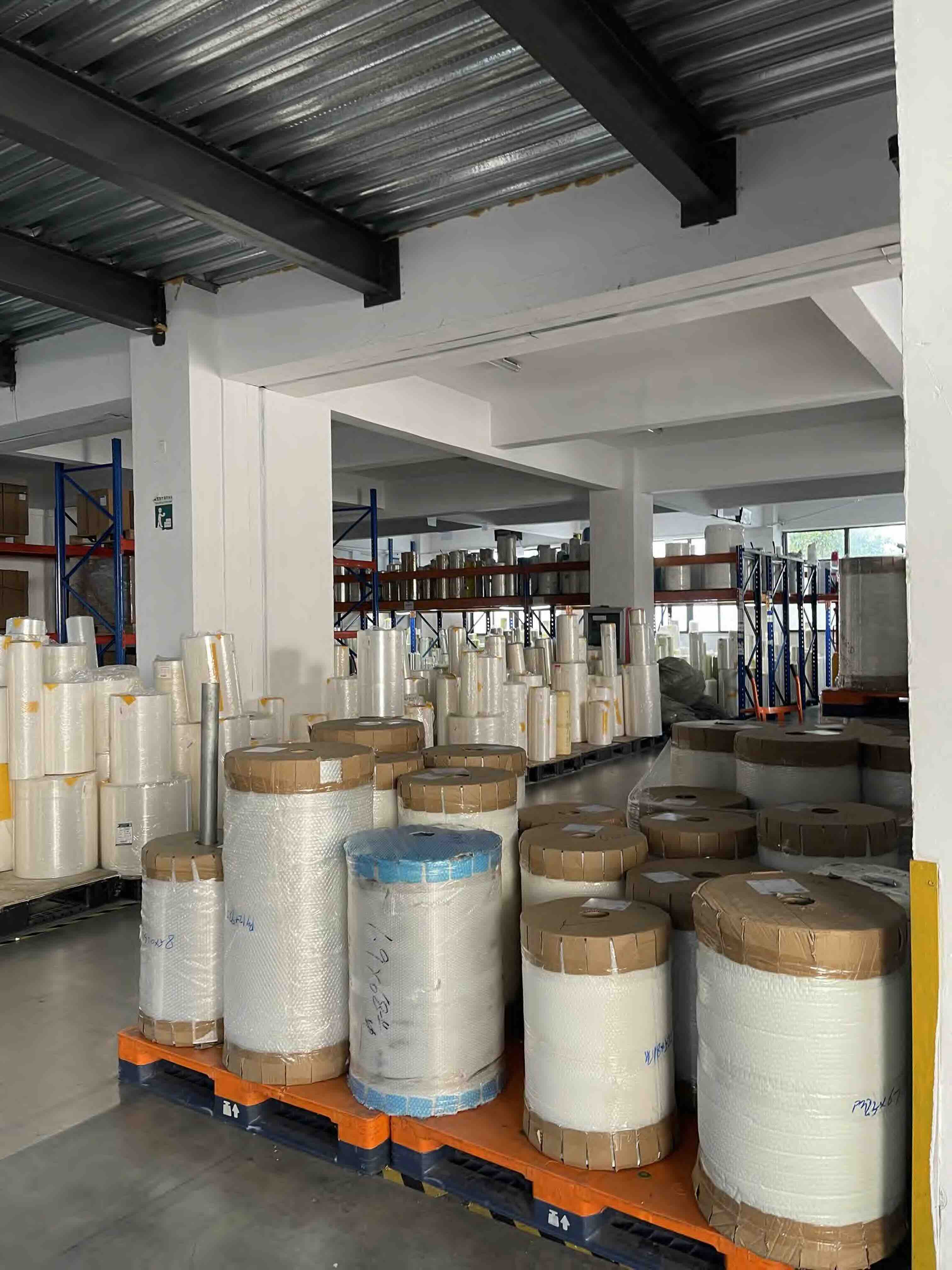
Every laminate starts with the films on the shelf. Below are the materials most commonly used in laminated flexible packaging. They are options, not a list of what goes into every order. A coffee bag, a pet food pouch and a powder sachet will usually end up with quite different combinations.
PET / BOPET
Biaxially oriented polyester film is dimensionally stable, strong for its thickness and tolerates heat well. It holds its shape under the tension and temperature of printing and lamination, which makes registration easier to control. That is why PET is so often the outer film in a printed laminate: the design is printed on its inner face, and the PET protects it.
BOPP
Biaxially oriented polypropylene is widely used for snacks and dry foods. It is clear, fairly stiff and has good moisture resistance. Compared with PET it has lower heat resistance, so sealing and lamination conditions have to respect that, and it is often chosen where moisture protection and cost matter more than high-temperature performance.
PE / LDPE / LLDPE
Polyethylene is the most common inner sealant layer. It is flexible, seals at relatively low temperatures and, in LLDPE grades, stays tough. The sealant choice affects far more than the seal itself. It changes the sealing temperature window on the pouch machine, how well the pouch seals through product dust on a filling line, and how easily the film slides over equipment. Choosing the wrong sealant can cause problems that only appear at the customer's filling line.
CPP
Cast polypropylene is an alternative sealant. It is clearer and stiffer than PE and handles higher temperatures, which is why it pairs naturally with BOPP and is used in some applications that see more heat. It is generally less forgiving than PE when sealing through contamination, so the application decides which one fits.
Metallized PET (VMPET)
VMPET is PET film with a very thin layer of aluminum deposited on it. That layer improves oxygen, moisture and light barrier compared with plain PET, and gives the familiar silver look inside many snack and coffee bags. Because the metal layer is extremely thin, heavy flexing and rough handling can crack it and reduce its barrier, so it is treated more carefully than plain film.
Aluminum foil
Foil gives the highest barrier of the common options when it is intact, blocking oxygen, moisture and light. It is usually sandwiched between an outer film and a sealant. Thin foil can develop pinholes, and repeated folding or creasing can crack it, so foil structures need careful handling through lamination, slitting and pouch making.
PA / Nylon
Nylon adds toughness and puncture resistance. It is used where hard or sharp contents, such as some pet food kibble, could push through a softer structure, or where the pouch must survive rough handling.
Paper-based layers
Paper is laminated to film for its look and feel, its stiffness and its printability. A kraft paper outer layer bonded to a plastic sealant gives a natural appearance, but it is still a mixed-material laminate. A pouch that looks like paper is not the same as a fully paper-based package, and the difference matters for disposal.
When our engineering team evaluates a structure, they look at the product's sensitivity to oxygen and moisture, the barrier it needs, the pouch format, the sealing requirements, the shelf-life target the customer has in mind, the filling conditions and cost. The structure is a balance of all of these, not a single "best" material.
How Multilayer Packaging Structures Are Designed
A typical laminate has four functional parts:
Outer printing layer, which carries the design and takes the scuffing.
Intermediate barrier or reinforcement layer, such as foil, VMPET or nylon, where the product needs it.
Adhesive bonding layers, which hold each pair of films together.
Inner heat-seal layer, which touches the product and forms the seals.
Adding layers is not automatically better. Each extra layer adds cost, another bond that has to hold, and another material that complicates disposal. A structure should match its contents, the filling equipment, transport conditions and end-of-life requirements. The examples below are common industry structures, shown to explain the logic. They are illustrations, not a list of standard stock structures, and you can see the pouch formats they go into among our flexible packaging products.
| Example laminate | Main layer functions | Typical application considerations | Important limitations |
|---|---|---|---|
| PET / PE | PET for print and stiffness, PE for sealing | Dry products with moderate barrier needs | Limited oxygen and light barrier |
| PET / VMPET / PE | Print, metallized barrier, sealant | Snacks, coffee and other products sensitive to oxygen and light | Metal layer can crack with heavy flexing |
| PET / AL / PE | Print, foil barrier, sealant | Products needing very high barrier | Pinholes and flex cracking must be controlled; mixed materials |
| BOPP / CPP | Clear print film, PP sealant | Snacks and dry foods where moisture resistance matters | Lower heat resistance than PET-based structures |
| PET / PA / PE | Print, puncture resistance, sealant | Heavier or sharp-edged contents such as some pet foods | Nylon is sensitive to humidity; extra layer adds cost |
| Paper / PE-based laminate | Paper look and stiffness, sealant | Products where a natural appearance matters | Still a mixed-material laminate; barrier depends on added layers |
Recyclable mono-material structures take a different approach. Instead of combining PET, foil and PE, the engineer builds the whole structure from one polymer family, for example all-PE or all-PP, using oriented and specially modified films to recover the stiffness, print surface and heat resistance that PET would normally provide. The trade-offs are real: sealing windows can be narrower and barrier may need special coatings. Even then, a PE-based or PP-based laminate is not automatically recyclable everywhere. Whether it can be recycled depends on the full structure, the inks and coatings, and whether local collection systems accept that material.
PROCESS CONTROL
Preparing Film Before Lamination
Before the film enters the lamination stage, a standard preparation sequence applies:
Confirm the approved material structure and specifications for the job.
Check film roll identification and condition.
Check film width and general appearance.
Consider surface treatment and surface energy.
Confirm that printed film is suitable to laminate, where the job is printed.
Prepare the rolls for loading on the machine.
Set up web alignment and tension for the job.
Surface energy deserves a word of explanation. For adhesive to bond, it has to wet the film, meaning it must spread out evenly instead of beading up, the way water beads on a waxed car. Many plastic films have naturally low surface energy, so they are often corona treated, an electrical surface treatment that raises surface energy and helps adhesives and inks wet the film. Treatment levels can drop over time in storage, so the treatment needed depends on the material, its age and the coating system. The right level is set by the specification for each job.
The common problems at this stage are simple but costly if missed: dust or contamination on the film, wrinkles already wound into a roll, uneven or loose winding, damaged roll edges and printing defects carried over from the press. Any of these can turn into a bonding or appearance problem once the films are laminated, and at that point they are locked inside the structure.
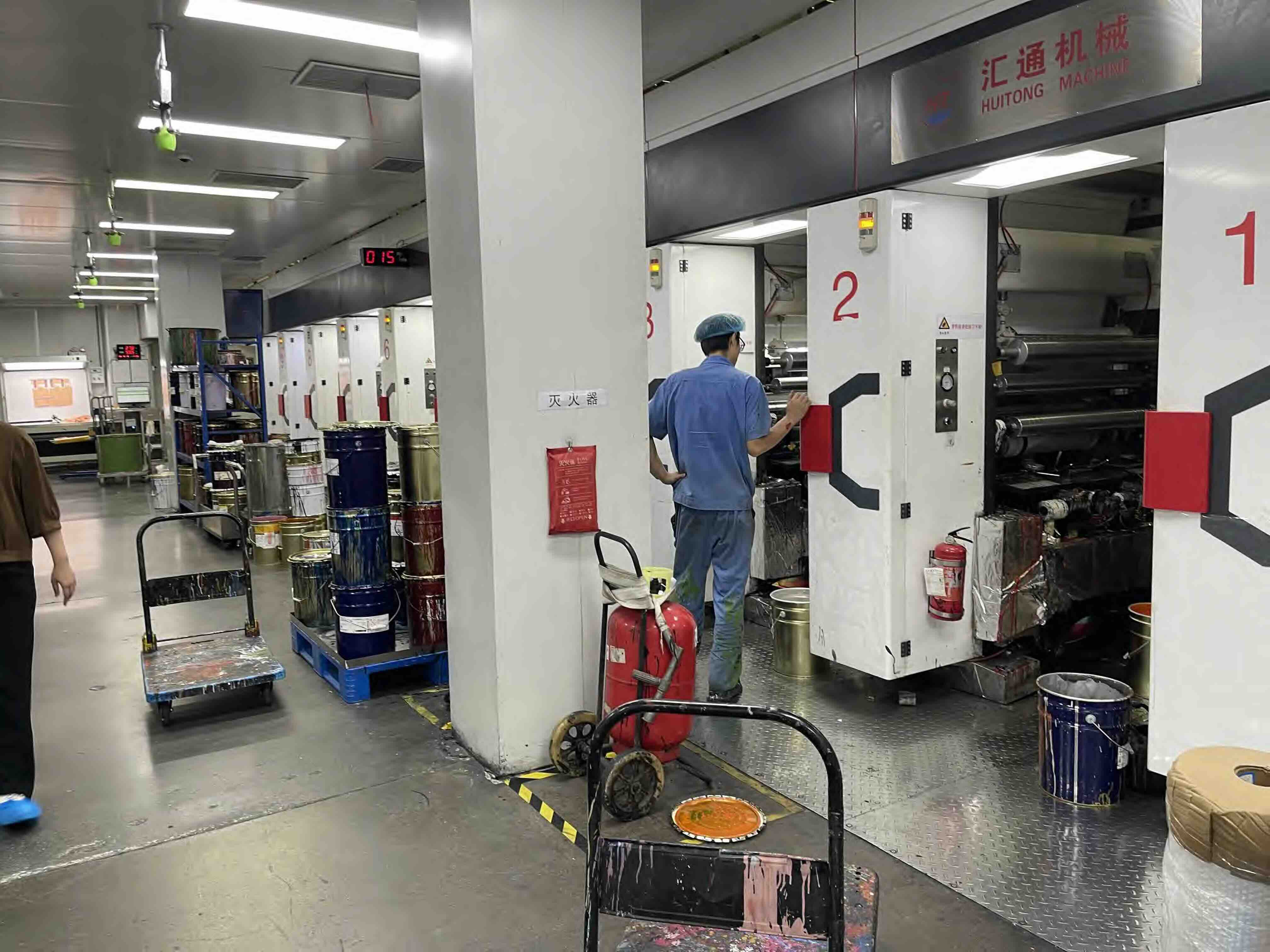
LAMINATION PROCESS
Flexible Packaging Film Lamination Process at BioPouches
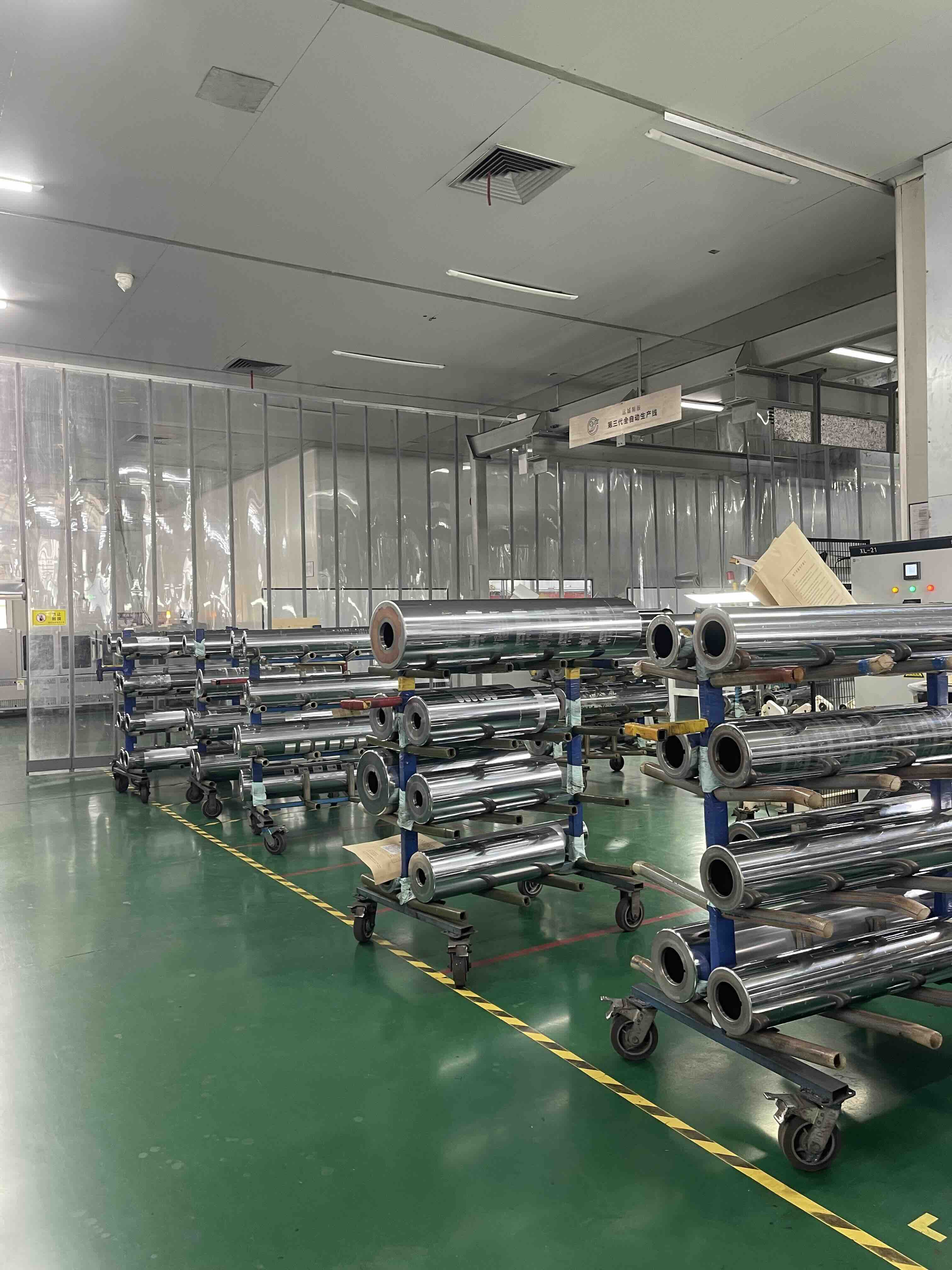
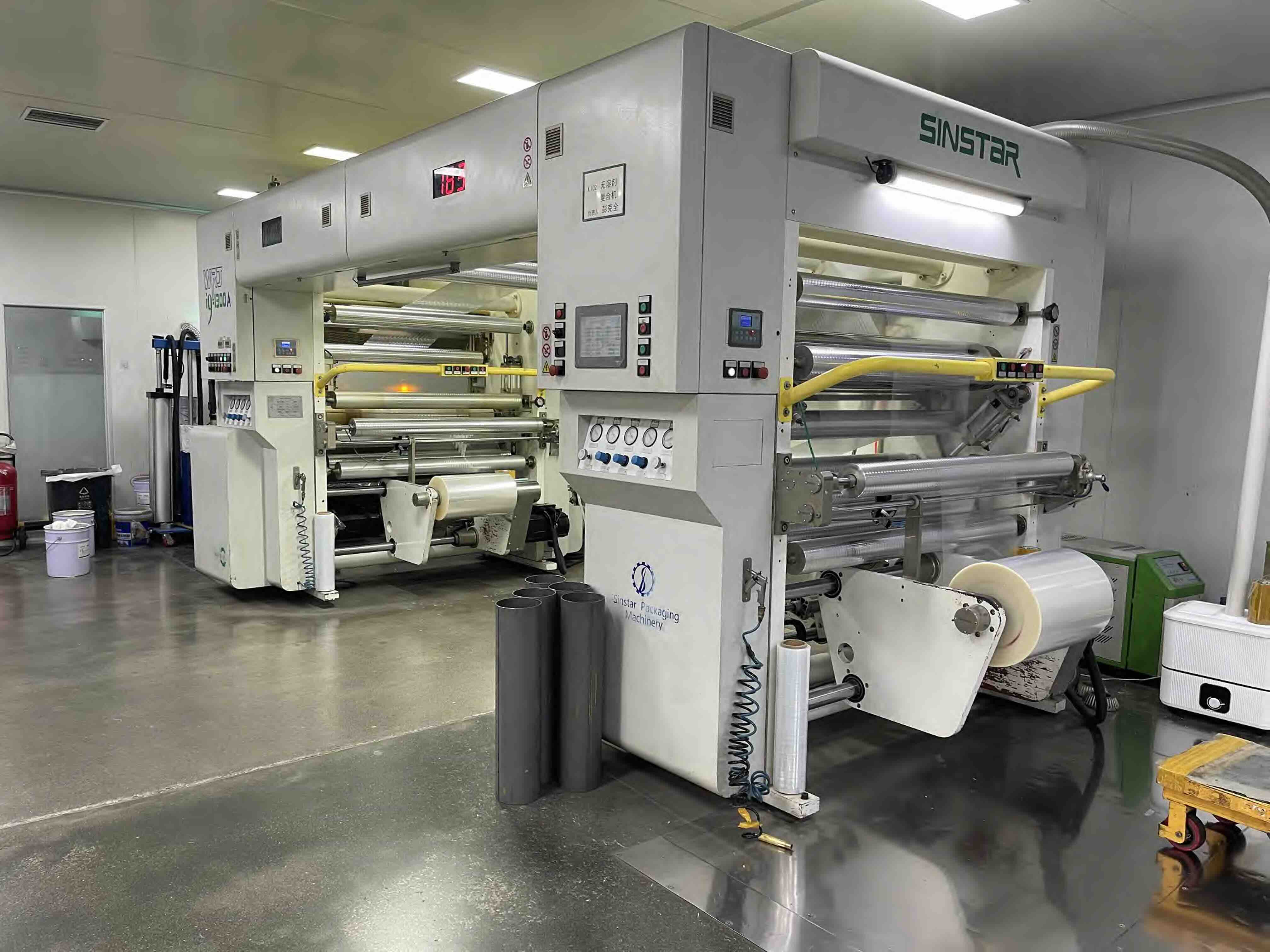
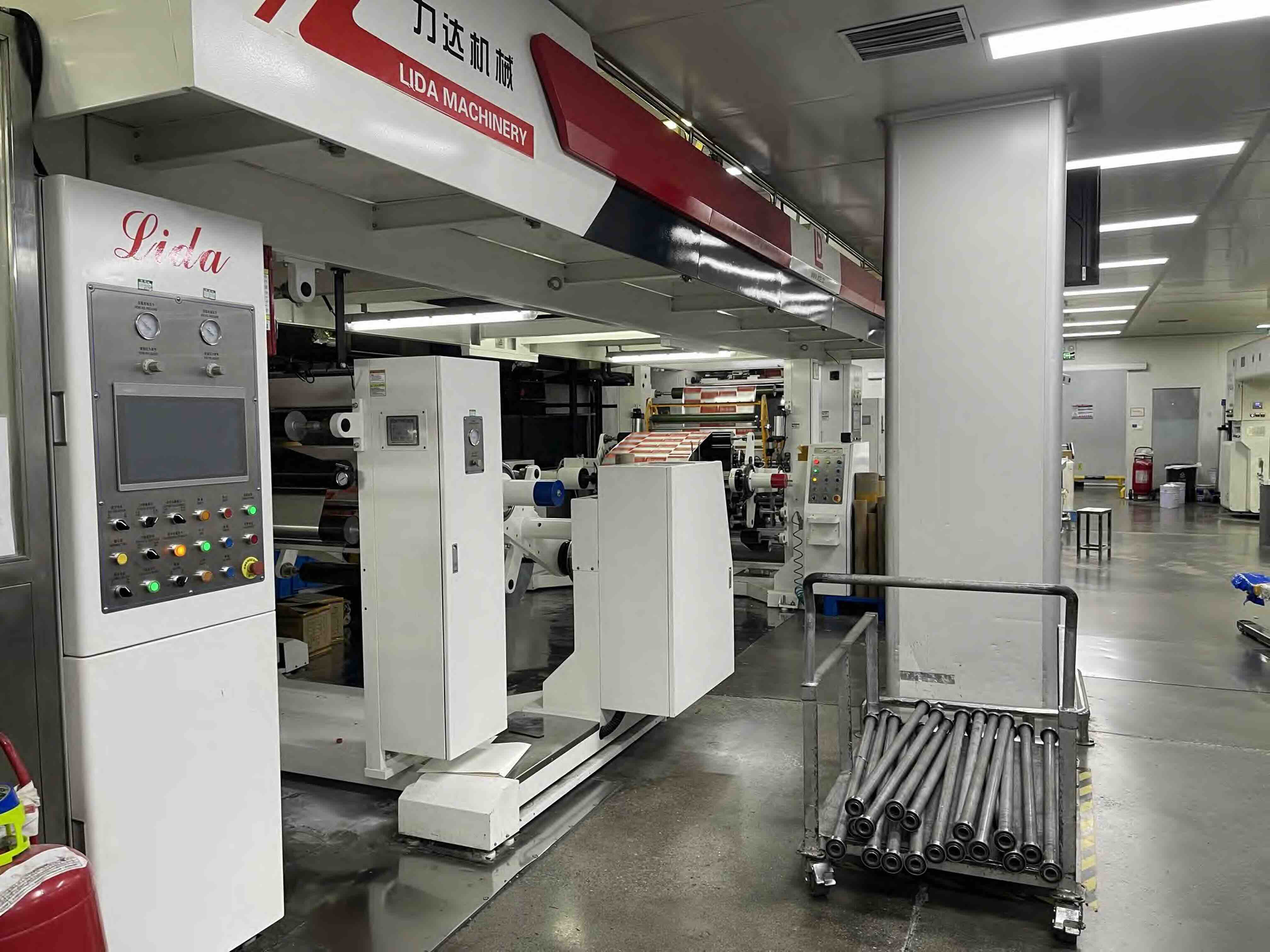
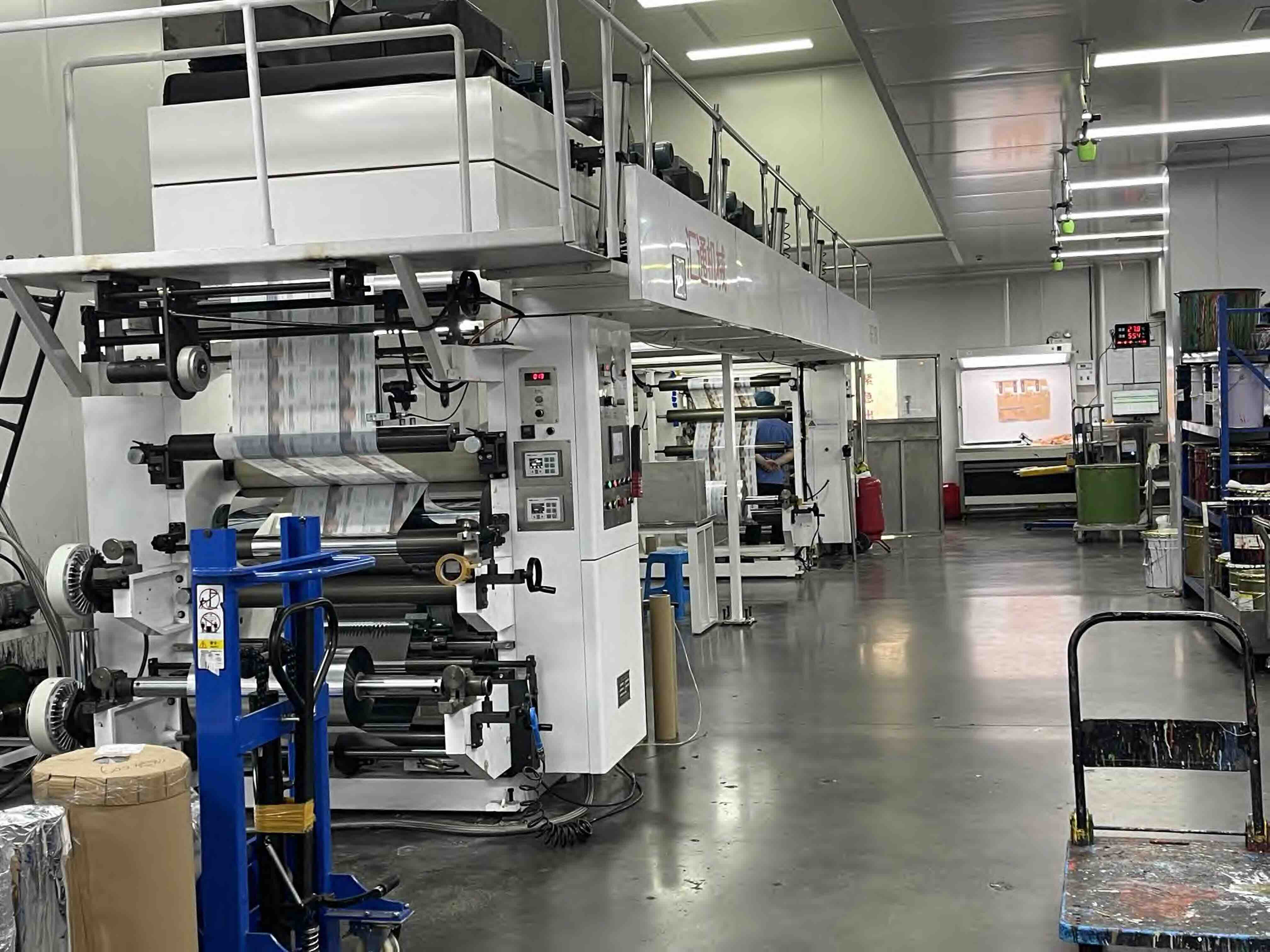
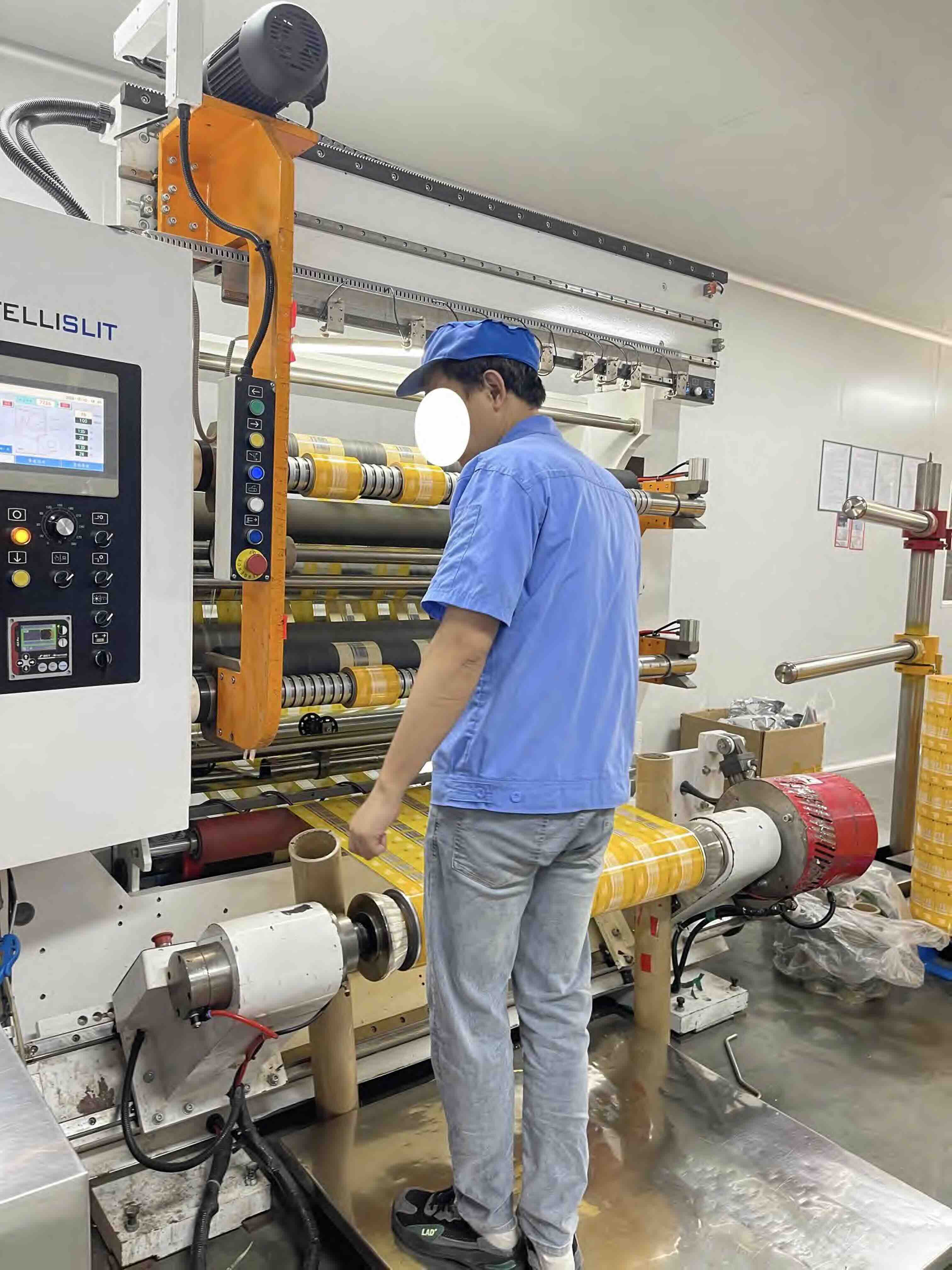
Lamination is a roll-to-roll process. Film unwinds from one roll, is coated with adhesive, meets a second film, is pressed together and winds up again as one laminated roll. Each step has its own ways of going wrong, which is why each step gets attention.
Step 1: Loading and unwinding the film rolls
The primary film and the secondary film are loaded on separate unwind stations. As they feed into the machine, web tension and alignment have to stay stable. If one film is pulled harder than the other, it stretches slightly more, and when the bonded laminate relaxes later, that difference can show up as curl or tunneling. Smooth, even unwinding is the first line of defense against those defects.
Step 2: Preparing the bonding system
Flexible packaging is laminated with different adhesive systems, and each works differently. In solvent-based lamination, the adhesive is dissolved in a solvent, coated onto the film and passed through a drying oven to evaporate the solvent before the films meet. In solventless lamination, a two-part adhesive with no solvent is applied directly, usually from heated rollers, so there is no drying oven, and the bond builds as the components react. Water-based adhesives carry the adhesive in water, which must also be dried off. Adhesive selection depends on film compatibility, end-use conditions such as heat or aggressive contents, regulatory requirements for the application and the production specification.
Step 3: Applying the adhesive
The adhesive needs to go on as an even, continuous coating across the full width of the web. Coating weight, meaning how much adhesive is applied per area, is one of the main process variables. Too little and the bond may be weak or patchy. Too much and the laminate can show appearance defects, take longer to cure and cost more. Engineers watch coating uniformity, wetting of the substrate and the condition of the coating rollers, because a damaged roller or a dry spot repeats down the whole roll.
Step 4: Bringing the films together
The coated film and the second film meet in the lamination nip, a pair of rollers that press them together under controlled pressure, often with heat. Here the goal is full contact between the layers with no air trapped between them, the two webs aligned, and tension balanced so nothing wrinkles. If the outer film and sealant film do not track consistently through the laminator, the roll may develop wrinkles. A wrinkle is not just cosmetic. It can make later slitting or pouch forming more difficult, particularly when the web needs to stay aligned through multiple rollers. Stable machine operation at this point is what gives the customer a laminate that runs smoothly on their own equipment later.
Step 5: Rewinding the laminated film
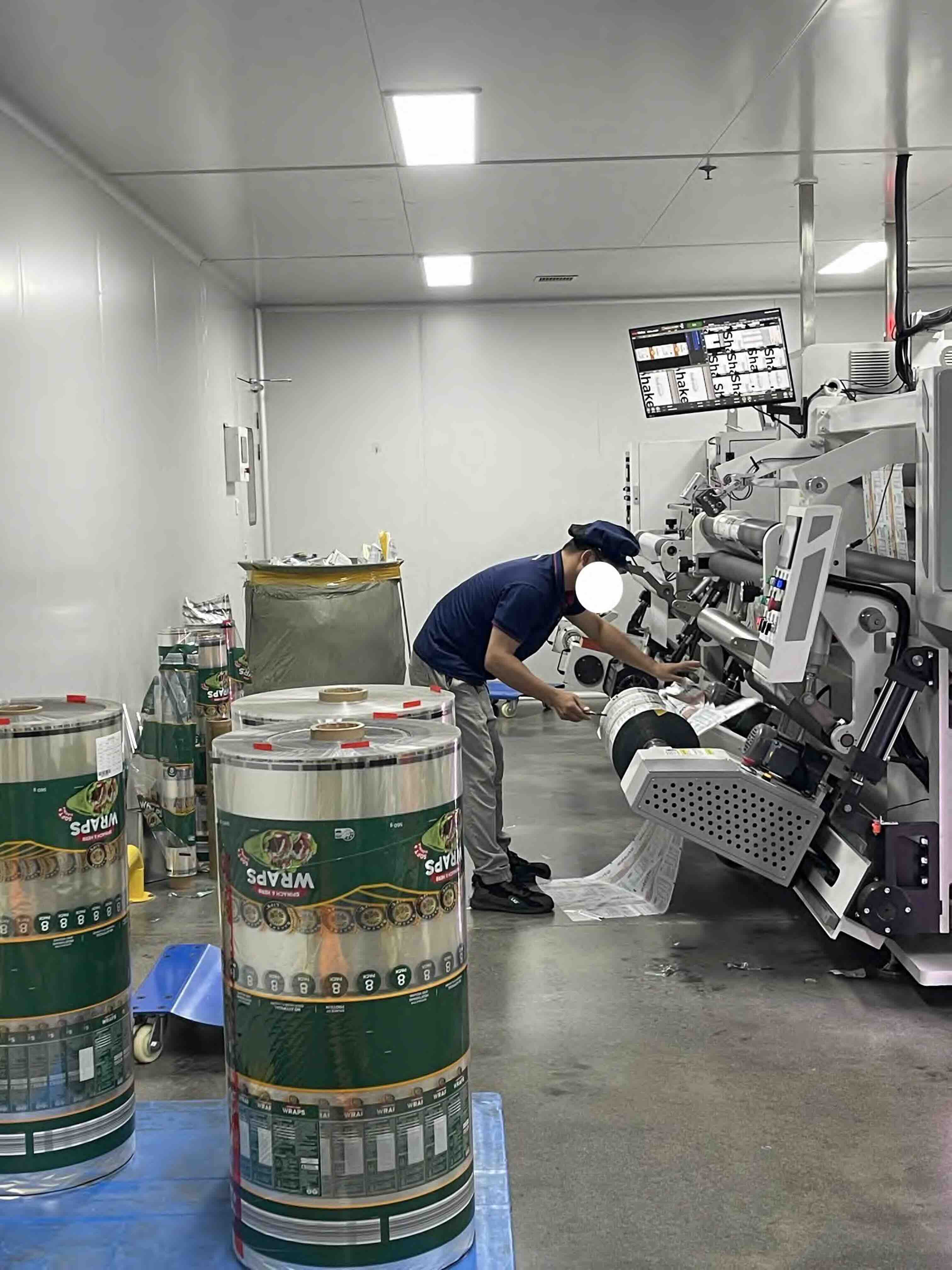
The bonded laminate is wound into a roll. Winding tension matters more than it seems. Too loose, and the roll can telescope, with layers sliding sideways like a pulled-out telescope. Too tight, and the pressure inside the roll can create wrinkles, impressions or blocking. Some defects actually form during winding and storage rather than at the nip, which is why the roll is checked again later and not only as it comes off the machine.
Step 6: Curing and bond development
Many adhesive systems do not reach full strength when the film leaves the laminator. Two-part adhesives in particular continue to react and build bond strength over time, often in a controlled curing environment. How long that takes, and under what conditions, depends on the adhesive chemistry, the film structure and the application, so it is set per job rather than as one fixed rule. Converting a laminate too early can cause problems with some systems: layers may separate during slitting or sealing, or the bond may not reach the strength the specification needs.
Step 7: Inspection before conversion
Before the laminate moves on, it is checked for appearance, winding quality and bonding condition, along with any other characteristics the specification calls for. The approved specification decides which checks and tests are relevant. A high-barrier foil laminate for a sensitive product and a simple PET/PE structure for a dry product do not need identical evaluation.
What Happens to Printed Film During Lamination?
In most laminated pouches, the print is not on the outside surface. It is reverse printed on the inner face of the clear outer film, then laminated so the ink sits between two layers. That protects the graphics from scuffing, moisture and contact with the product, and gives the print a glossy, sealed-in look.
It also means the ink and the adhesive have to work together. The adhesive bonds directly to the printed ink, so ink-adhesive compatibility and ink adhesion to the film both affect bond strength. Heavy ink coverage, such as large solid areas, can bond differently from unprinted film. In solvent-based printing and lamination, solvent left in the ink has to be removed properly, because retained solvent can affect odor and bonding. Registration is set at the printing stage, and lamination has to handle the printed web without distorting it. The final structure also changes how the design looks: the same print can appear brighter over a white layer and different again over a metallized one.
Printing and lamination are related, but they are separate operations with separate checks. Problems from one stage can only be fully understood when both are considered.
COMMON DEFECTS
Common Flexible Packaging Lamination Defects and Their Causes
When the bond between layers is poor, the problem may not become visible until later in production. Most lamination defects have more than one possible cause, so troubleshooting starts with what is observed and works back through materials, adhesive, settings and handling.
Delamination
Delamination is separation between layers. It can show as layers peeling apart at a seal, cut edge or corner, or as areas where the films have lifted. Possible causes include insufficient adhesive coverage, incompatible surfaces, low surface energy, contamination, incomplete curing or unsuitable processing conditions. It matters because it weakens the pouch, can compromise barrier and looks poor on the shelf.
Bubbles and trapped air
Small bubbles or pockets between layers can come from air trapped at the nip, uneven coating, insufficient nip pressure or surface features of the substrate. They are often visible in clear areas and can grow if the bond around them is weak.
Wrinkles and creases
These usually trace back to web tension, misalignment, uneven film tracking or winding problems. They affect appearance and can cause trouble in slitting and pouch forming.
Tunneling
Tunneling looks like raised, hollow channels running across or along the web where one film has separated from the other. It typically happens when one film was stretched more than the other during lamination and later tries to shrink back before the bond is strong enough to hold it. Differential tension, film shrinkage and the speed of bond development all play a part.
Curling
A laminate that curls toward one side usually has an imbalance: films with different stiffness, thermal behavior or moisture response, internal stresses from uneven tension, or processing conditions that set stress into the structure. Curl can make pouch forming and filling harder.
Poor bond strength
Even without visible separation, the bond may be weaker than specified. Causes include adhesive and substrate incompatibility, poor surface preparation, incomplete cure and contamination.
Haze, streaks or uneven appearance
Coating problems, material or adhesive incompatibility, film defects and process variation can all leave a hazy, streaky or mottled look, especially in clear windows.
Residual solvent or odor
This applies to solvent-based systems. If solvent is not removed properly during drying, or curing is not suitable, the laminate can carry an odor or have weakened bonds. Proper drying and curing are what prevent it.
Barrier damage
Foil pinholes, cracks in a metallized layer and flex cracking from repeated folding can all reduce barrier without being obvious to the eye. Careful handling through every stage matters for these structures.
| Defect | What an operator may observe | Possible technical causes | What should be investigated | Potential effect on the finished pouch |
|---|---|---|---|---|
| Delamination | Layers lifting or peeling, often at edges or seals | Low coat weight, poor wetting, contamination, incomplete cure | Coating, surface treatment, cure status, ink coverage | Weak seals, lost barrier, poor appearance |
| Bubbles / trapped air | Small pockets between layers | Air at the nip, uneven coating, low nip pressure | Nip settings, coating uniformity, film surface | Visual defects, possible weak spots |
| Wrinkles / creases | Lines or folds in the web or roll | Tension imbalance, misalignment, poor tracking | Unwind and rewind tension, roller alignment | Converting problems, appearance defects |
| Tunneling | Raised hollow channels in the laminate | Differential stretch and shrinkage before bond develops | Tension balance, film properties, cure progress | Local separation, appearance defects |
| Curling | Laminate rolls toward one side | Structure imbalance, internal stress | Film combination, tension, process conditions | Difficult forming and filling |
| Poor bond strength | Layers separate more easily than specified | Incompatibility, poor surface preparation, incomplete cure | Adhesive selection, treatment, cure conditions | Delamination in use or handling |
| Haze / streaks | Cloudy or streaky areas, especially in clear zones | Coating defects, incompatibility, film defects | Coating rollers, adhesive, film quality | Poor shelf appearance |
| Residual solvent / odor | Noticeable odor in the laminate | Insufficient drying or cure in solvent systems | Drying conditions, ink and adhesive solvents | Odor, possible bond weakness |
| Barrier damage | Pinholes or cracks, often not visible | Thin foil, flexing, rough handling | Handling, folding, material gauge | Reduced oxygen and moisture protection |
QUALITY INSPECTION
How BioPouches Inspects Laminated Packaging Materials
Our factory has a packaging testing laboratory alongside production. The equipment covers different properties of the material and the finished pouch, and not every instrument measures lamination quality directly. Which tests apply to a job depends on its specification.
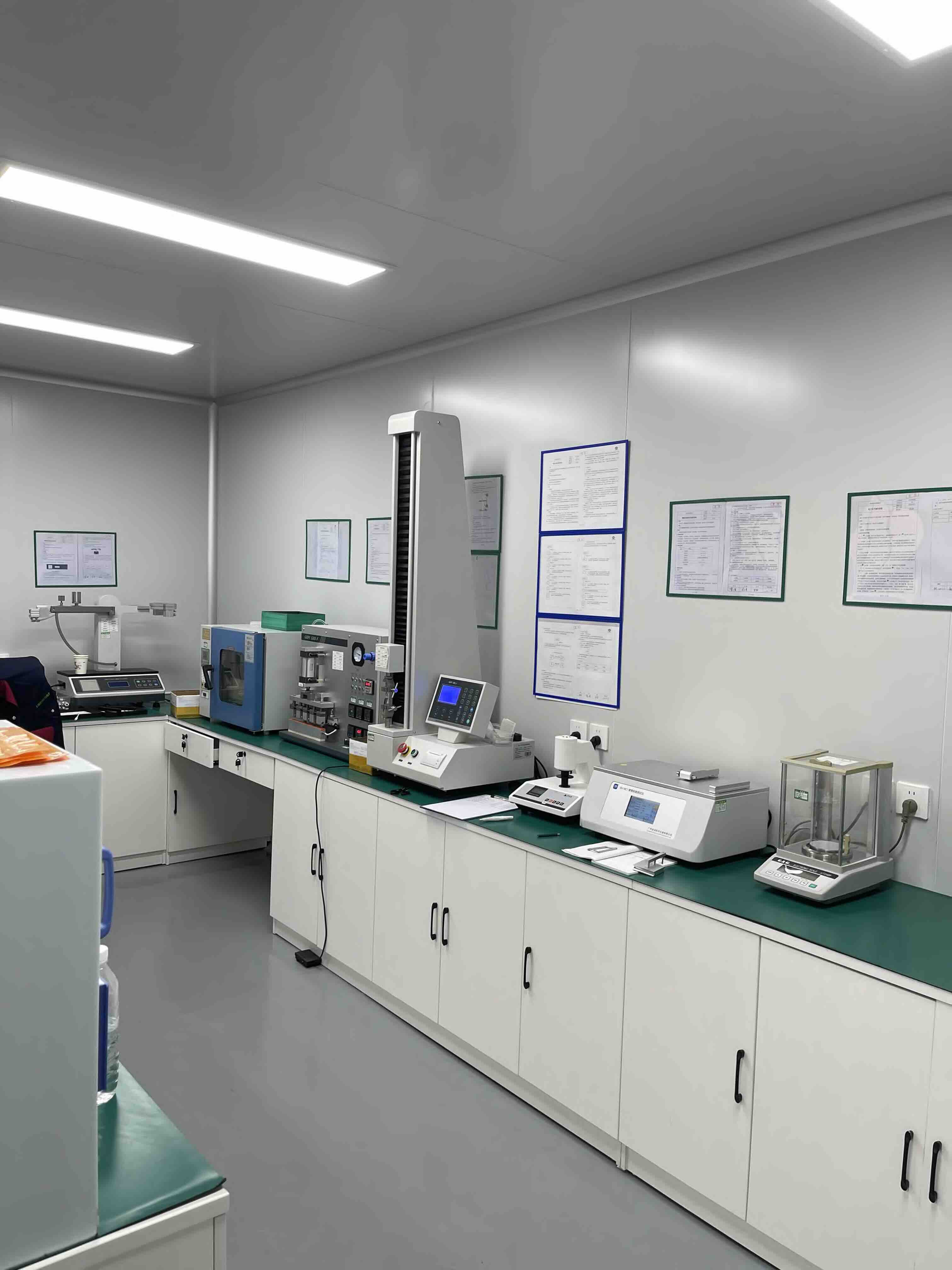
Visual film inspection
Laminated and printed film is checked for wrinkles, surface appearance, printing defects and roll condition. Many lamination problems are visible if someone is looking for them before the film moves on.
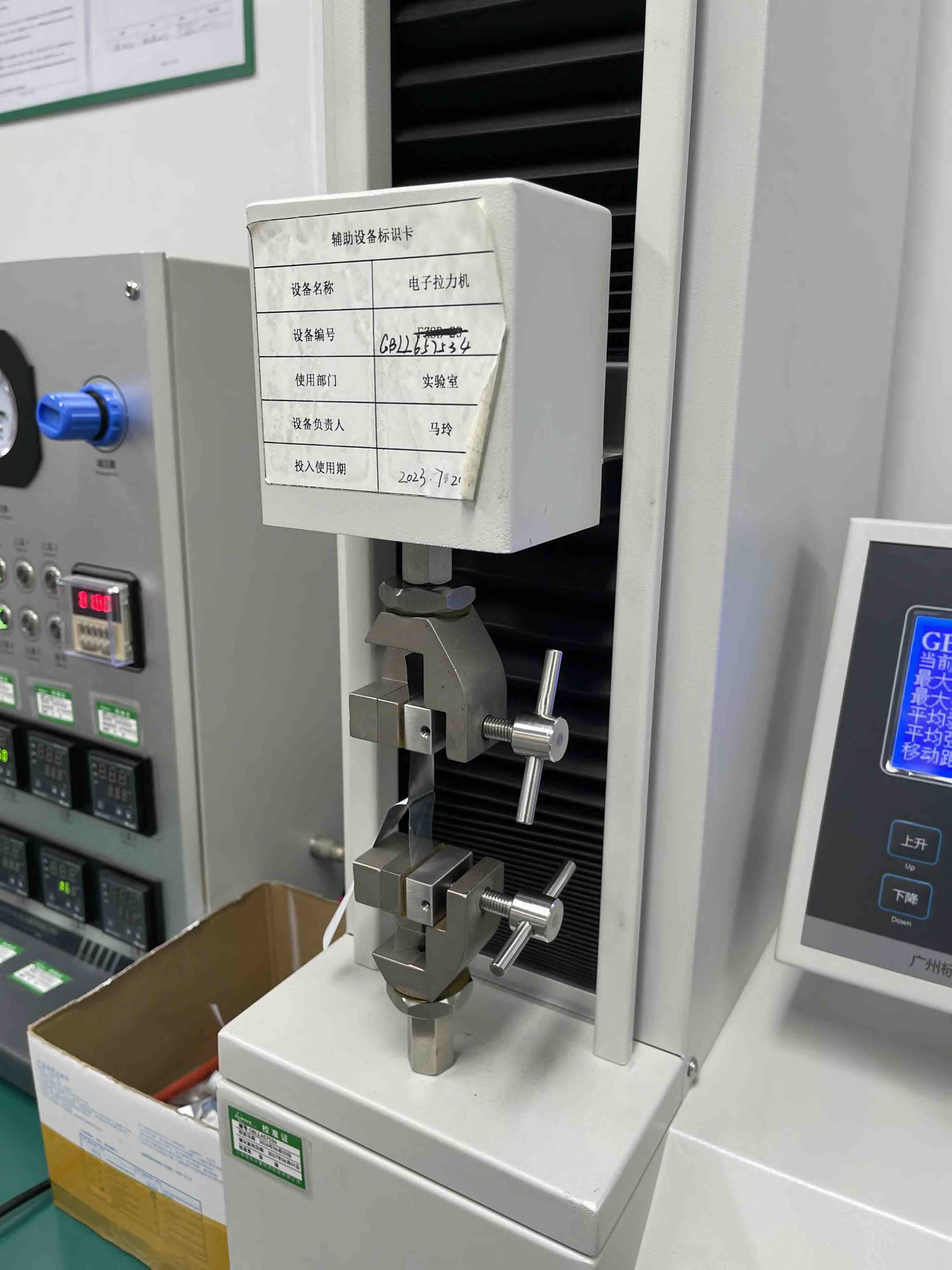
Tensile testing
An electronic tensile tester pulls a film sample at a controlled rate and records how much force it takes to stretch and break it. That shows strength and elongation, which affect how the film behaves under tension during converting and how it stands up in use. In the wider industry, bond strength between layers is commonly measured with a peel test, in which a strip of laminate is separated at a controlled speed on a tensile tester and the force is recorded. The method and acceptance values are set by the specification for each structure.
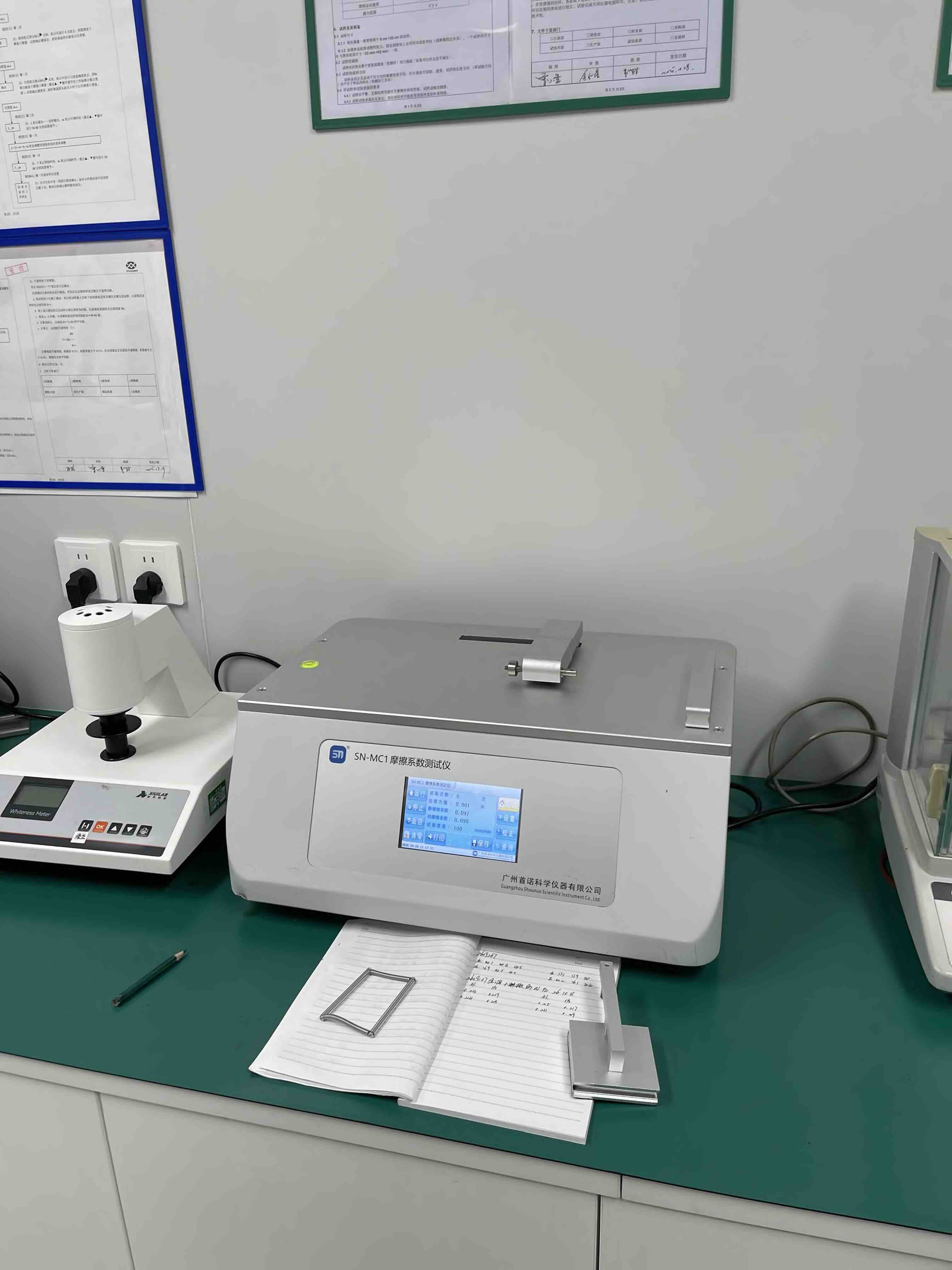
Coefficient of friction testing
This measures how easily a film surface slides against another surface. It matters in pouch making and on the customer's filling line, where film that is too slippery or too grippy can track badly, jam or misfeed.
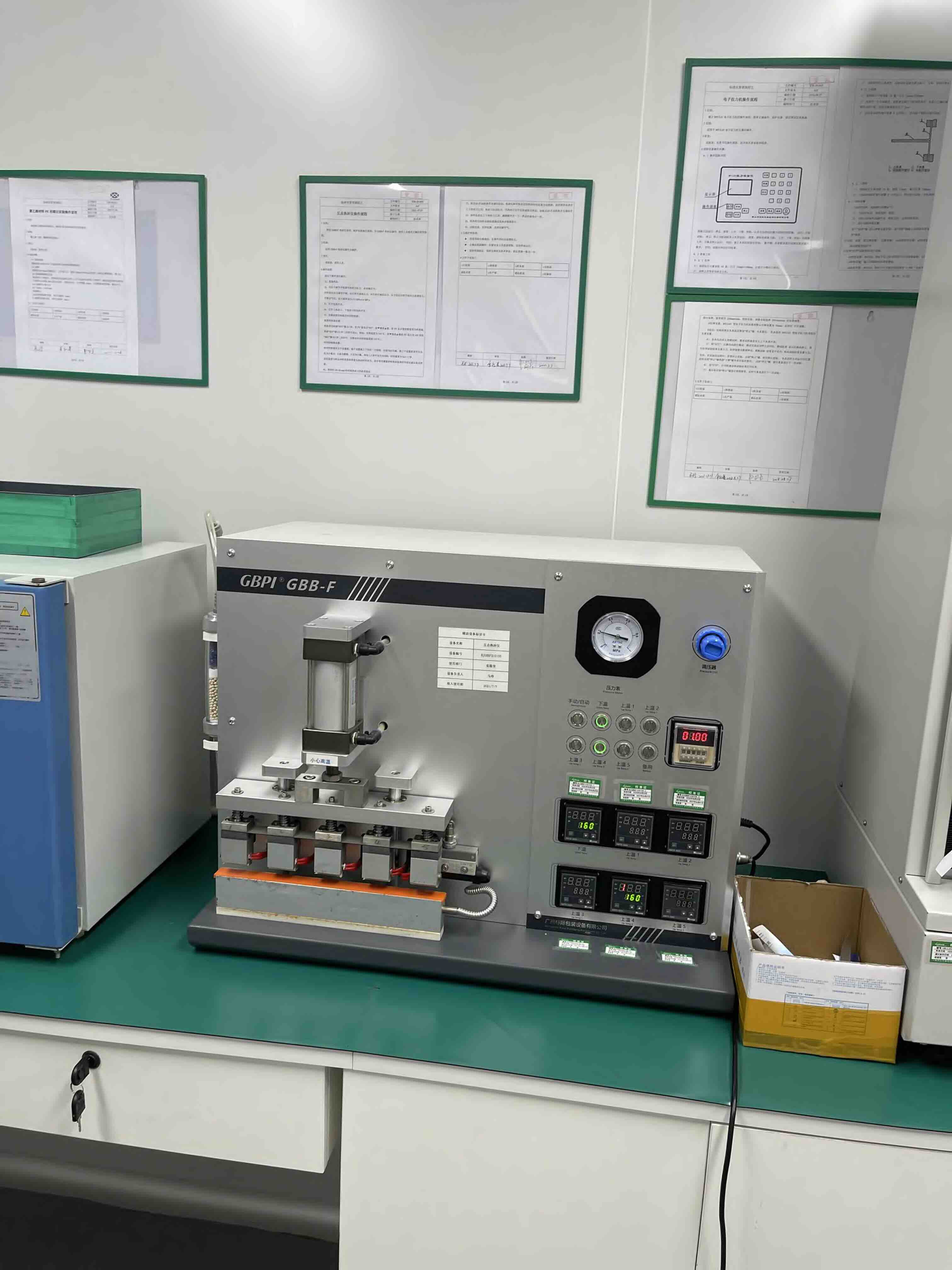
Heat-seal testing
A heat-seal tester makes test seals at set temperature, pressure and dwell time, which shows how the sealant layer behaves and what sealing conditions suit the material. The sealant has to perform properly because the seals are what close the pouch.
Leak and seal-integrity testing
Leak testing helps find defects in seals and the pouch body that would let air or product through. It evaluates the finished pouch rather than the lamination bond itself.
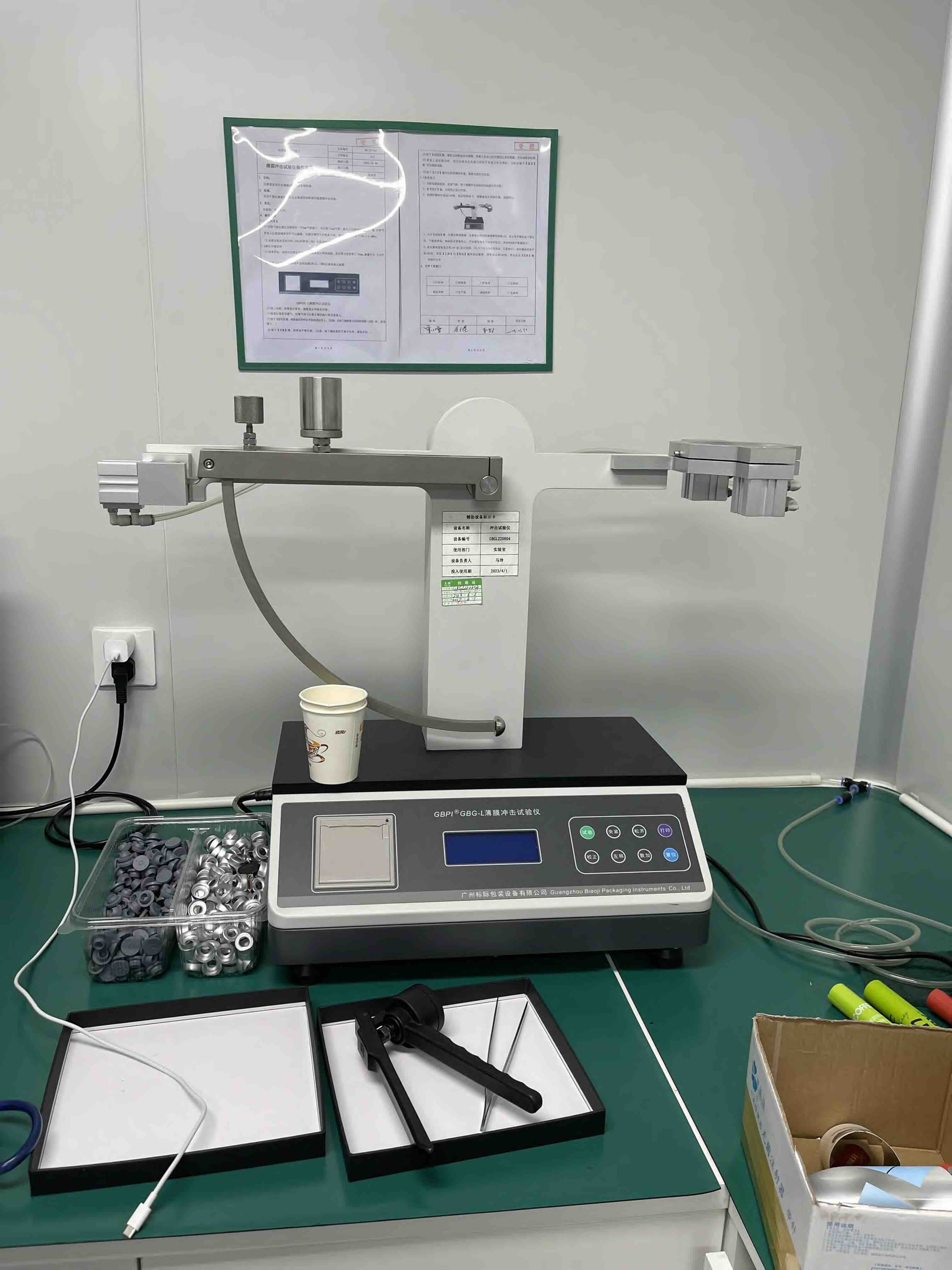
Temperature-controlled laboratory equipment
Laboratory ovens hold samples at a controlled temperature for conditioning and for test procedures that call for it.
To be clear about what these measure: tensile, friction, heat-seal and leak testing each look at different properties. None of them on its own is a direct measure of lamination bond strength.
Why Lamination Quality Matters to the Customer
Lamination decisions show up in the finished pouch in practical ways: how well the product is protected, how the print looks, how durable the pouch is, how reliably it seals, how it runs on a filling line and how it survives transport.
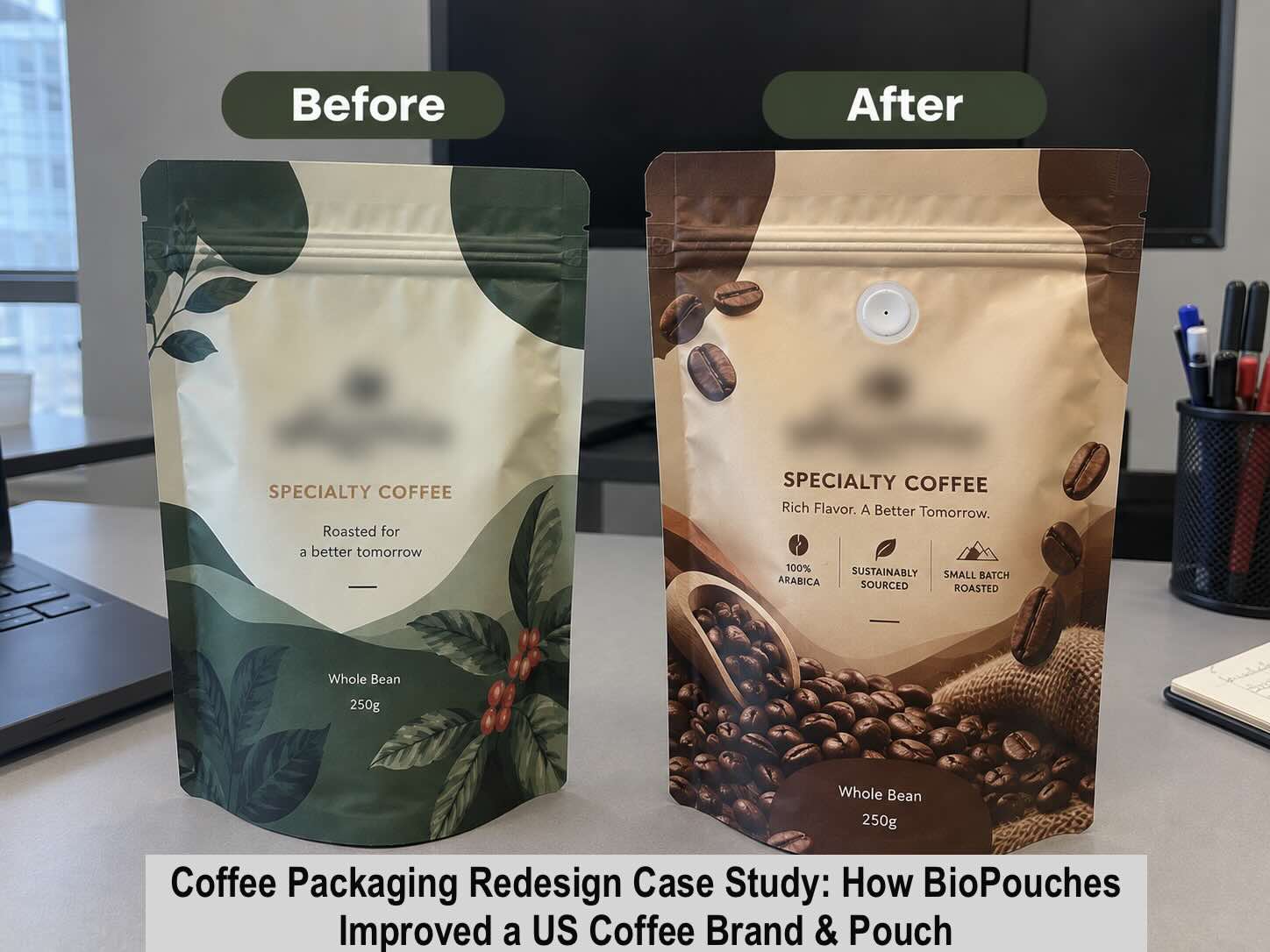
For coffee packaging, the structure has to protect aroma and limit oxygen exposure, so the barrier layer is chosen around how long the coffee needs to stay fresh. A weak bond or a cracked metallized layer can undermine that barrier even if the right materials were chosen.
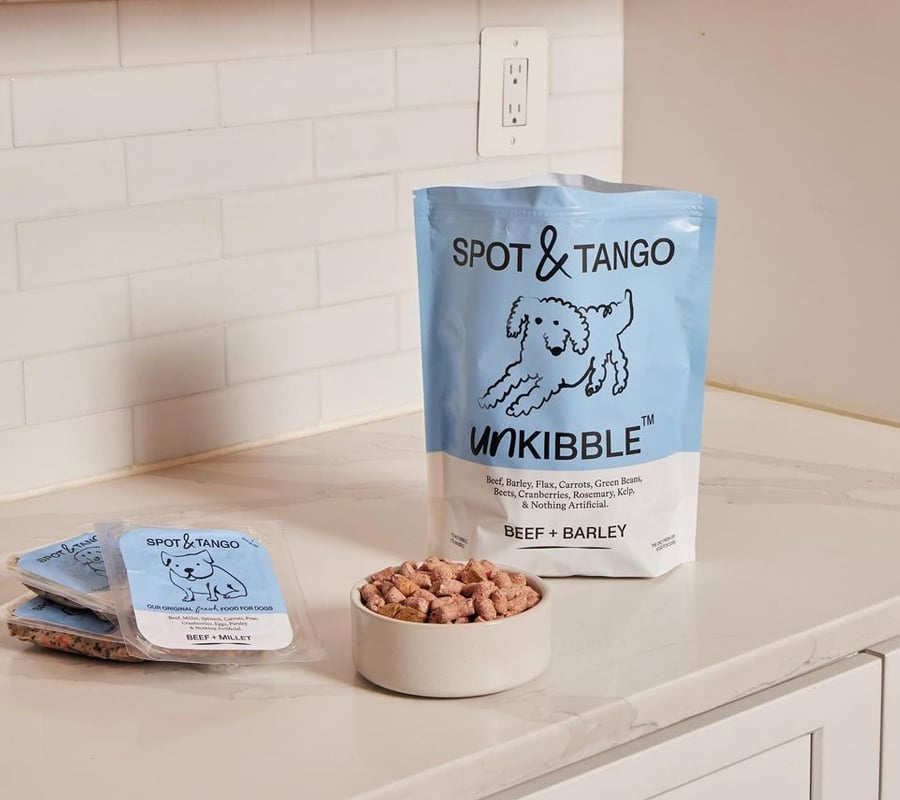
For pet food, puncture resistance, strong seals and handling performance matter, because pouches are often heavy and contents can be hard-edged. For powders, moisture protection is usually the priority, and seals have to hold through fine dust on the filling line.
Lamination alone does not determine shelf life. Good packaging performance comes from material selection, lamination, sealing, filling and storage working together. It is also why we avoid unnecessary complexity: the best structure is the one that does the job, not the one with the most layers.
What Happens After Film Lamination?
Once the laminate is inspected and ready, it moves into conversion. Not every product follows exactly the same route, but a typical sequence is:
Film inspection.
Slitting or cutting to width, where required.
Pouch forming.
Folding and heat sealing.
Adding application-specific features where required, such as zippers or degassing valves.
Finished pouch inspection.
Packing for shipment.
Questions Customers Commonly Ask About Film Lamination
Why are flexible packaging films laminated together?
Because no single film provides printability, barrier, strength and sealing all at once. Lamination combines films so each one does the job it is best at.
What is the difference between laminated film and single-layer film?
Single-layer film has one set of properties. A laminated film combines several, such as a printed outer film, a barrier layer and a sealant, bonded into one material.
What causes delamination in flexible packaging?
Usually weak bonding from insufficient adhesive, poor surface wetting, contamination, incompatible materials or incomplete curing. It often has more than one contributing cause.
Does every laminated film need curing?
Not in the same way. Many two-part adhesive systems need time to build full bond strength, and the curing required depends on the adhesive chemistry and structure.
How do you choose between PET, PE, PP and aluminum foil structures?
By the product's sensitivity to oxygen, moisture and light, the barrier and shelf-life target, the pouch format, sealing and filling needs, disposal requirements and cost.
Can laminated flexible packaging be recyclable?
Some mono-material structures, such as all-PE or all-PP designs, are developed for recycling streams. Whether a pouch can actually be recycled depends on the full structure and local collection systems.
How does lamination affect heat sealing and shelf life?
The sealant layer and the quality of the bond affect seal strength, and the barrier layers affect protection. Shelf life also depends on sealing, filling and storage, not lamination alone.
Lamination Is Only One Part of Packaging Performance
Reliable packaging comes from choosing suitable films, getting a consistent bond, controlling tension, coating and curing, and then checking the finished material against its specification. Lamination sits in the middle of that chain, and a problem anywhere along it can show up in the finished pouch.
BioPouches manufactures custom flexible packaging at our factory in Shanghai, China. We also have offices and warehouse operations in Canada serving customers in Canada and the United States, as well as operations in the Philippines.
Discuss Your Flexible Packaging Material Requirements
Tell us what you are packaging, the pouch format you need, and any specific barrier or sealing requirements. Our team can review the material options with you.
Discuss your packaging requirementsFlexible Packaging Expert at BioPouches
Asad Manan has over 6 years of hands-on experience in flexible packaging at BioPouches. He specializes in beauty product, Coffee, Food-Snacks, and health products packaging solutions that protect sensitive formulas and extend shelf life. With strong content writing skills, he creates practical guides to help brands choose the right packaging for stability, hygiene, and sustainability.
Latest News