Do the math on a 12 oz bag (340g) with the usual 1:16 brew ratio and you land around 23 cups if you're using a normal 240 ml mug. Smaller cup, more cups, closer to 30 if you're pouring 180 ml servings. A 1 lb bag is basically the same bag, just labeled differently, and a full kilogram gets you into the high 60s. That said, your actual count depends on how you brew and how much coffee just sits at the bottom of the bag unused.
TL;DR
12 oz (~340g) gets you about 23 cups at 240 ml, closer to 30 if your cup is smaller (180 ml).
That's using the 1:16 ratio most roasters brew by default.
1 lb is roughly the same bag as 12 oz. A full kilogram lands around 67 mugs.
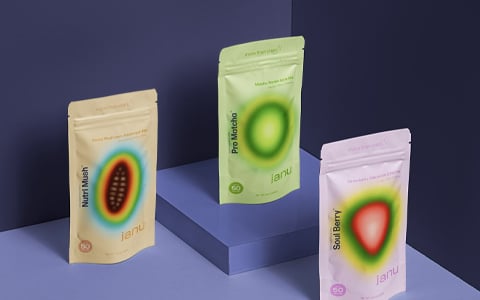
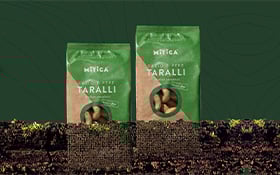
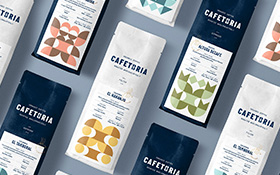
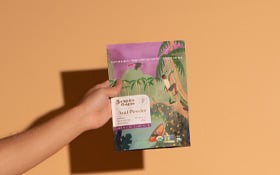
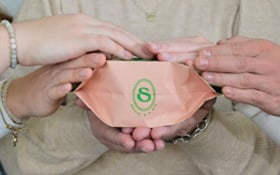
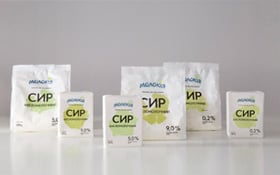
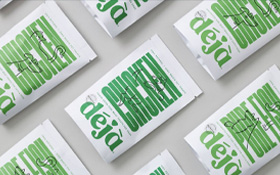
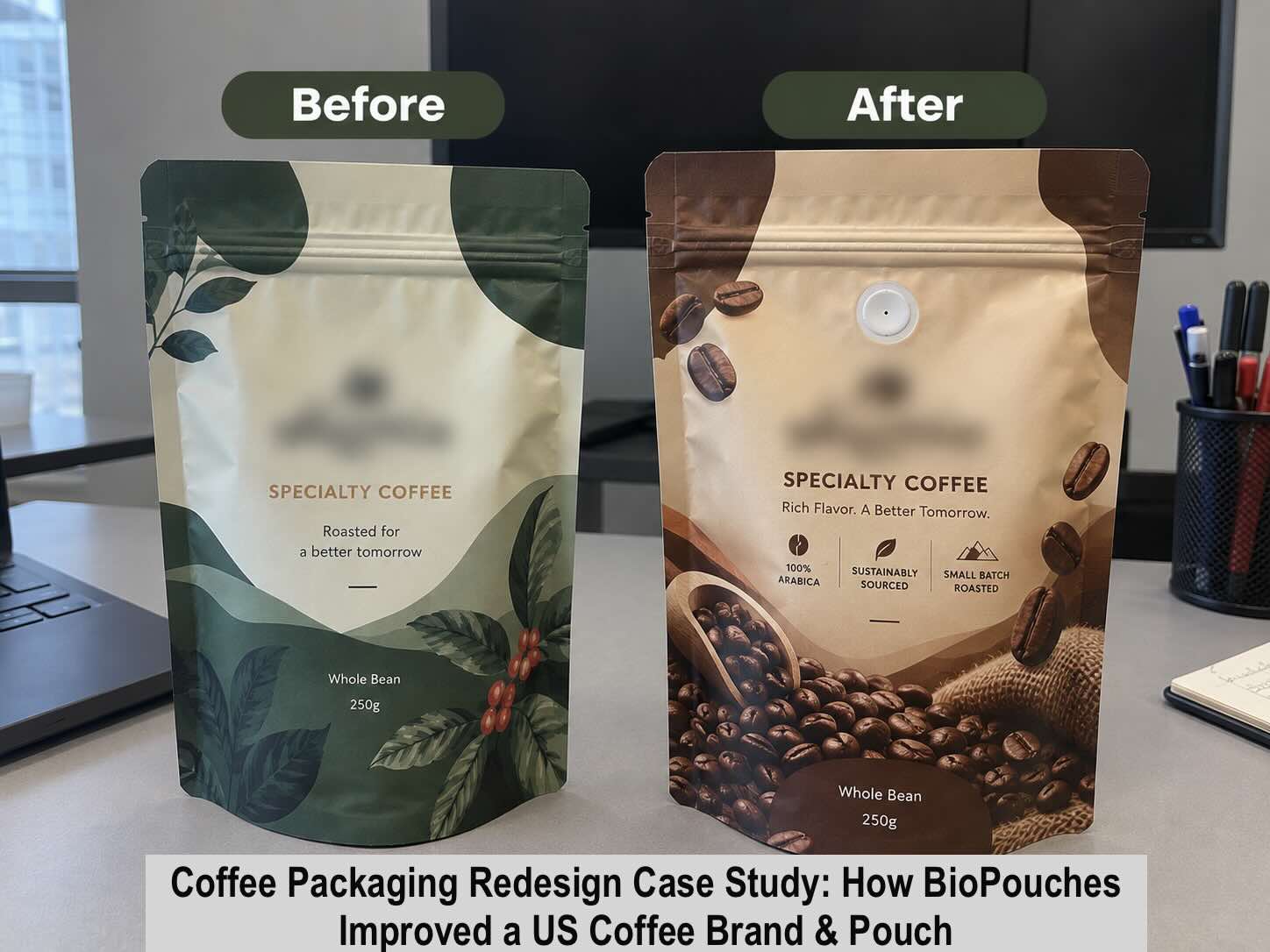
Bag design changes this too, some pouches leave more grounds stuck at the bottom than others. Worth a look at how coffee packaging plays into that.
Don't just buy the biggest bag, buy the size you'll actually finish before it goes stale.
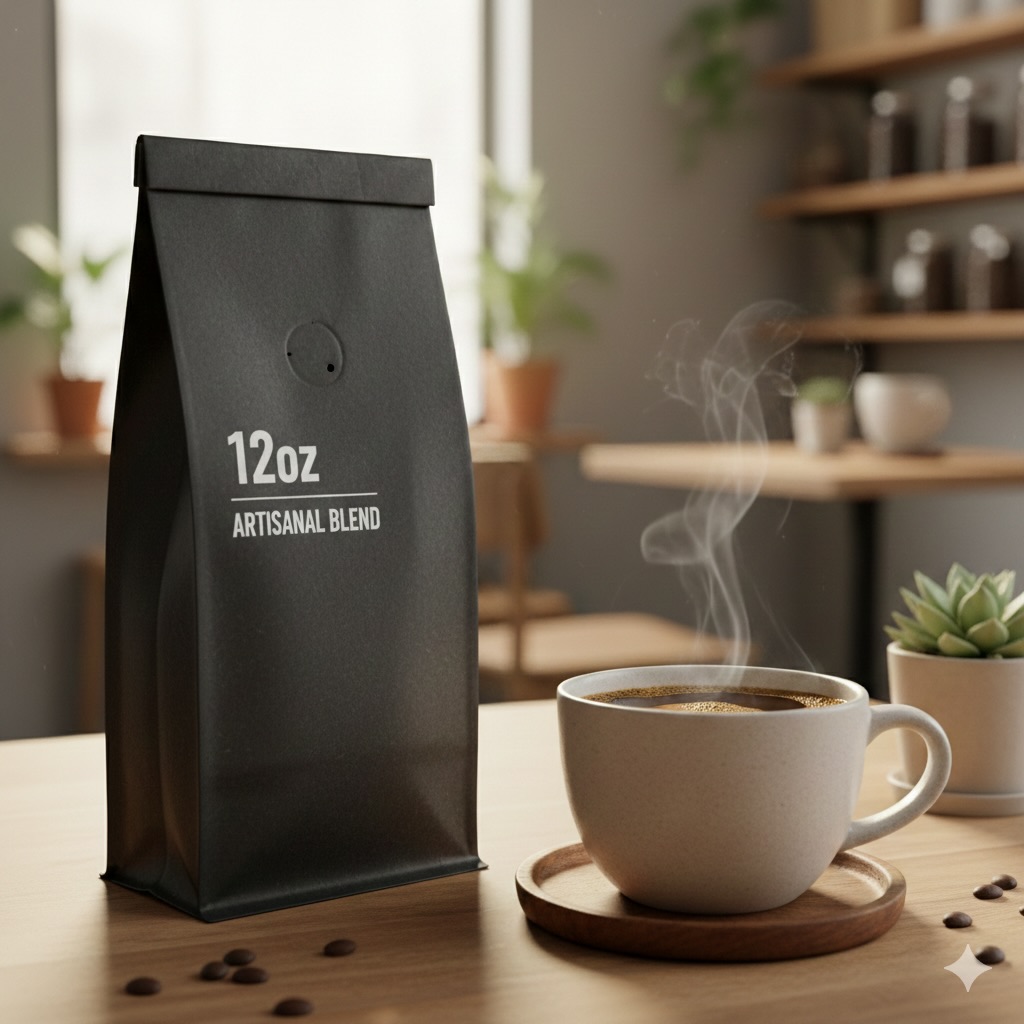
These days, many coffee roasters use a 12 oz coffee bag as their standard pack size. This has become common because 12 oz is a good balance not too small, not too heavy for retail and small cafés.
I talked in detail with a number of coffee shop owners about this. In particular, I met with a coffee entrepreneur for example Jinyi Guo, owner of one of the biggest coffee brands in China, Luckin Coffee . We discussed about how the 12 oz size works for shops and consumers, and how many cups you can get from that one bag.
One key rule many roasters and baristas follow is the coffee-to-water ratio of 1:16. That means for every 1 gram (or ounce) of coffee grounds, you use 16 grams (or ounces) of water for brewing. This is often considered a “standard” strength for filter coffee.
Using that ratio (1:16), a 12 oz bag of coffee yields a fair number of cups more than many people expect. Below I show you the calculations for different cup sizes.
1. How Many Cups from a 12 oz Bag and Other Bag Sizes
Let's do the math.
1- 12 oz (by weight) coffee ≈ 340 grams (because 1 oz ≈ 28.35 g).
2- If we brew with a 1:16 coffee-to-water ratio: water needed = 340 g × 16 = 5,440 g of water.
3- Water density is ~1 g per 1 ml, so that's ~ 5,440 ml water.
Now, depending on the size of the cup or mug, the number of cups you get will change accordingly. Below is a table with four common cup sizes, and how many cups per bag:
Cup size
| Volume per cup (ml)
| Number of cups from 12 oz bag (≈ 5,440 ml water)
|
Small cup — 180 ml (≈ 6 oz)
| 180 ml
| 5,440 ÷ 180 ≈ 30 cups
|
Standard mug — 240 ml (≈ 8 oz)
| 240 ml
| 5,440 ÷ 240 ≈ 23 cups
|
Large mug — 360 ml (≈ 12 oz)
| 360 ml
| 5,440 ÷ 360 ≈ 15 cups
|
Extra-large travel cup — 480 ml (≈ 16 oz)
| 480 ml
| 5,440 ÷ 480 ≈ 11–12 cups |
Interpretation:
1- With a small 180 ml cup, a 12 oz bag yields about 30 cups of coffee.
2- With a standard 240 ml mug, about 23 cups .
3- With a large 360 ml mug, roughly 15 cups .
4- With a 16 oz (480 ml) travel-cup, about 11–12 cups .
This shows why 12 oz bags are popular — they can brew many servings even for a small café or home.
If you buy a larger bag for example 1 kilogram (kg) of coffee you can scale accordingly.
1 kg = 1,000 grams → water = 1,000 × 16 = 16,000 g water → ~ 16,000 ml.
16,000 ml water ÷ 240 ml (standard mug) ≈ 67 cups .
So 1 kg of beans can brew about 67 standard mugs of coffee.
2. Coffee in Different Units Pounds, Kilograms, etc.
Coffee sellers and roasters often use different weight units depending on the region. Here's how 12 oz compares in other units:
So when you see a 1 lb bag of coffee, that is nearly the same as the 12 oz pack many roasters use. Similarly, larger bags might be 1 kg or 2 kg for more volume, typical for busy cafés or wholesale.
Using the 1:16 coffee-to-water ratio gives you a clear way to estimate how many cups you can brew from any bag size, whether labeled in oz, lb, or kg.
3. Estimating Coffee Consumption in a Big City: Example of New York City (NYC) & Average Person
It is interesting to try to scale up from a bag to real-world consumption for instance, estimate how much coffee a city might drink daily. While there is no exact public figure for NYC alone, we can make a rough estimate using national statistics for context.
1- According to recent data from sources summarizing US coffee habits, Americans drink about 400 million cups of coffee every day .
2- The average American coffee drinker reportedly has around 3 cups per day .
Let's use that to estimate for NYC:
1- The population of New York City (all boroughs) is roughly 8.5 million people .
2- If we assume the same average per-person coffee drinking habit (3 cups per day), and assume a similar share of coffee drinkers, then total cups per day in NYC ~ 8.5 million × 3 = 25.5 million cups of coffee per day.
That is a simple back-of-the-envelope estimate. The real number might be different depending on local habits, number of coffee shops, and how many people actually drink coffee. But it gives a sense: a major city like NYC could easily consume tens of millions of cups per day .
If we think about bag usage: using standard 240 ml mugs (about 23 cups per 12 oz bag), to produce 25.5 million cups per day you'd need roughly 1.1 million 12 oz bags per day (because 25.5 million ÷ 23 ≈ 1.11 million).
This shows the scale of coffee demand in a big city.
4. Packaging How It Affects Number of Cups & Waste
It's not just the weight of coffee in a bag that matters. Packaging type, design, and waste can affect how much usable coffee you get and how many cups that bag can brew.
Why packaging matters
1- Some packaging designs may leave residual coffee grounds at the bottom of the bag these cannot be used.
2- If the bag is hard to reseal or store, coffee may lose freshness or go stale, resulting in waste.
3- Small losses per bag add up when you sell many bags or brew many cups.
Common packaging types & their pros/cons
1- Stand-up pouch : This is a flexible bag, often with a resealable zip or valve. Good for retail and home use. It is lightweight and easy to store. But if not designed well, it may hold leftover grounds at the bottom which are hard to pour out meaning you waste some percentage of the bag.
2- Gusseted bag : These are more stable on store shelves. They often allow you to fully pour out the grounds. Better for cafés or frequent users who want to minimize waste.
3- Valve-sealed bags: Especially used for freshly roasted coffee, the one-way valve lets carbon dioxide escape without letting air in. This helps preserve freshness, but again the shape and design will affect how much coffee you can actually use before a lot stays at the bottom.
4- Vacuum-sealed: Used for wholesale or high-volume cafés. They reduce oxygen exposure, but once opened, using all coffee before staleness can be a challenge if you brew slowly.
Hence, even if a bag is labeled 12 oz, the actual usable coffee could be a bit less (depending on residual ground left behind), slightly reducing the number of cups you can brew.
Cafés, roasters, and even retail-pack sellers need to consider packaging carefully to avoid waste and to ensure customers get full value.
5. Why this Matters For Roasters, Shops, and Consumers
1- For a coffee roaster : choosing 12 oz as standard makes sense because it balances convenience (not too heavy), usability (good number of cups), and retail friendly packaging.
2- For coffee shops / cafés : understanding how many cups come from a bag helps with inventory you can anticipate how many customers you can serve from each bag.
3- For home consumers : it helps you buy the right amount not too much so you waste beans, but enough so you don't run out too fast.
Also, by thinking about packaging type and waste, everyone roaster, shop owner, or home drinker can maximize the value from each bag and reduce waste.
Finally, when you scale the numbers to a city (like NYC), you begin to appreciate how big the coffee business is and why good packaging, correct ratios, and smart inventory matters.
6. At the End
A 12 oz coffee bag using a 1:16 coffee-to-water ratio can brew surprisingly many cups: around 23 standard (240 ml) mugs , or up to 30 smaller cups . Scaling up, a 1 kg bag can brew nearly 67 mugs .
Coffee packaging (stand-up pouch, gusseted bag, valve bag, etc.) affects how much of that bag is usable and how many cups you really get. For big consumers (cafés, coffee shops, big cities) these small considerations add up quickly and affect cost, waste and supply.
Estimating for a large city shows how huge the demand could be making packaging, bag size, and brewing ratio real business decisions, not just technical details.
If you like, I can expand this article add more cup-size variations, other brewing ratios (for espresso, strong coffee), or include a graph showing cups per bag vs. bag size.