





Coffee Pouch With Valve | Stand Up Bag
Coffee Pouch With Valve – Specifications
| Brand | BIOPOUCHES |
| Bag Structure | Stand-up pouch with bottom gusset |
| Material | Compostable material option |
| Thickness | 110–170 microns |
| Size | Custom sizes; listed capacities 100 g–3.5 kg |
| Degassing Valve | One-way valve for roasted coffee |
| Closure | Resealable zipper top |
| Printing | Custom plant-based printing |
| Applications | Roasted coffee beans and coffee packaging |
| Customization | Size, artwork, material, printing and valve placement |
| Minimum Order | 1,000 pieces |
Compostability claims for the complete pouch, including its valve and zipper, depend on the verified finished-product construction and certification.
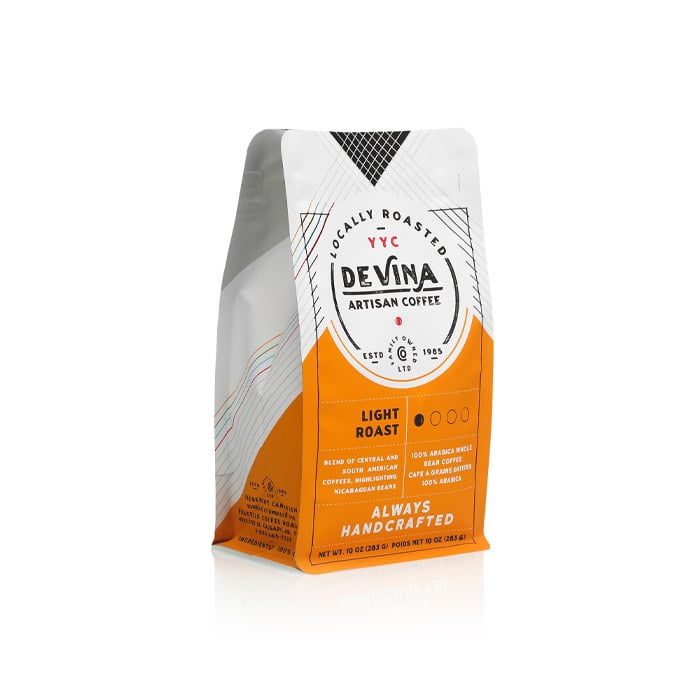
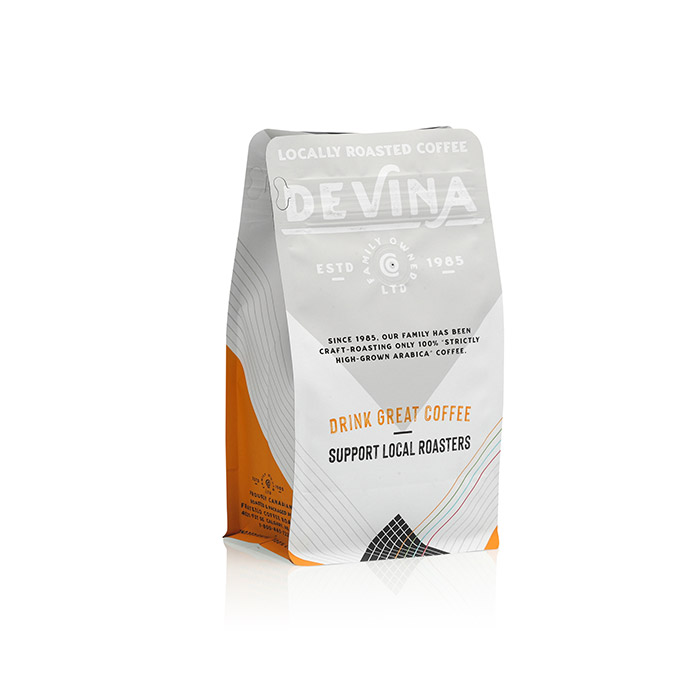
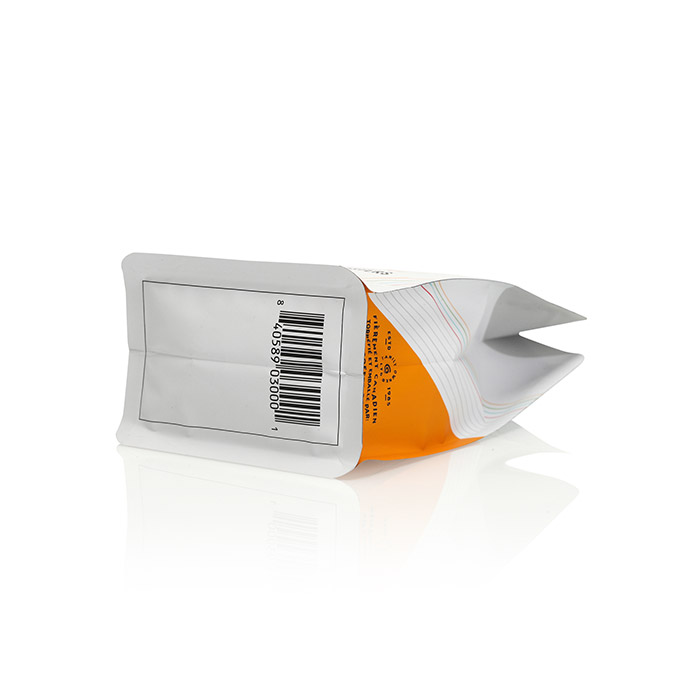
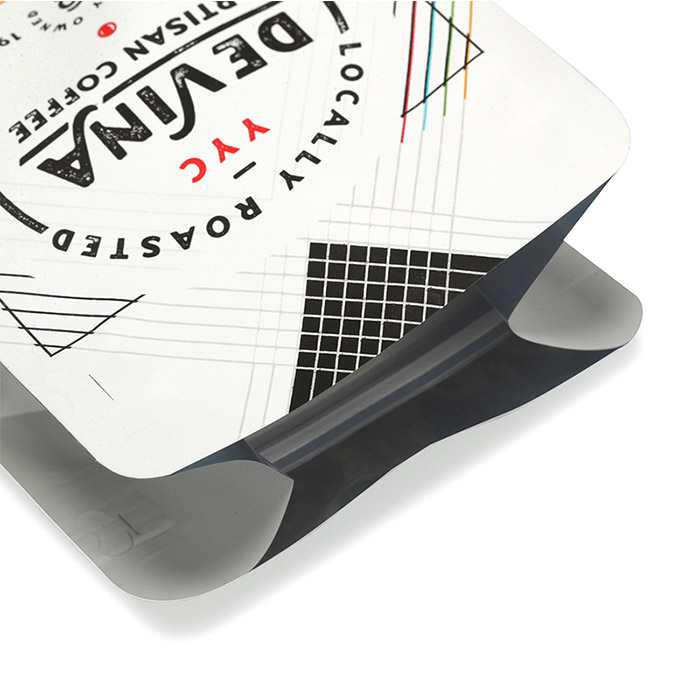
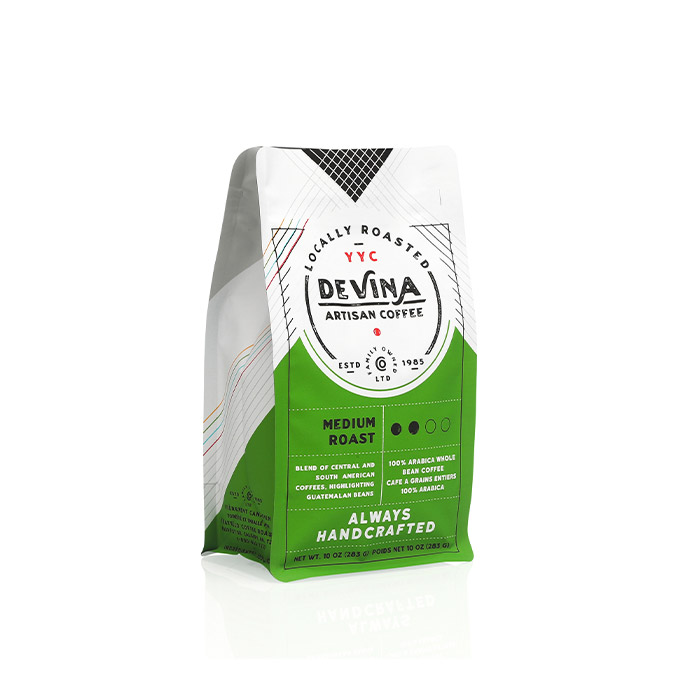
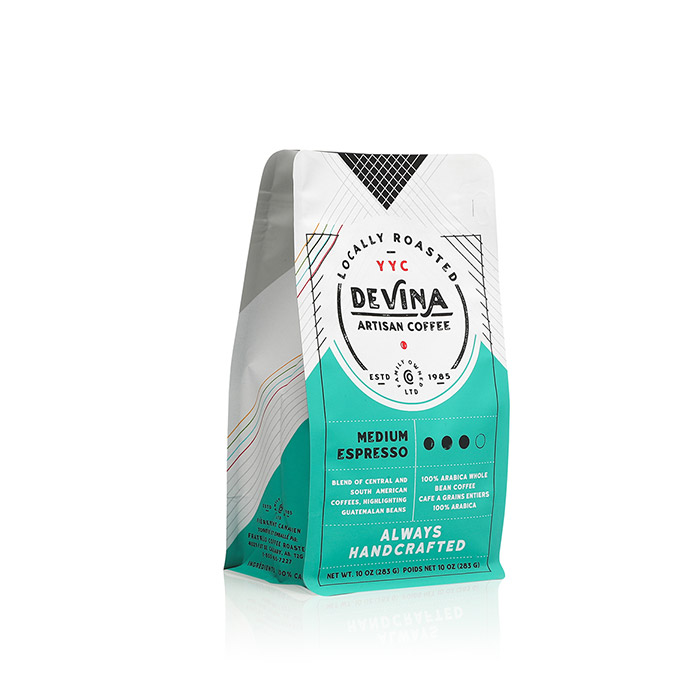
This coffee pouch with valve is a custom stand-up bag. The bottom gusset opens out when it's filled, so the pouch stands by itself, and we print your design on the film. What most roasters ask about first is the one-way degassing valve, so we'll start there.
Why Fresh Coffee Needs a Valve
Roasted coffee keeps giving off carbon dioxide for days, sometimes weeks, after it leaves the roaster. Seal it in a bag with nowhere for that gas to go and the bag starts to puff up. On a shelf it looks wrong, and the pressure strains the seams.
People sometimes ask why a small hole wouldn't do the same job. A pinhole lets the gas out, sure. It also lets air and moisture in, all day long, and the aroma drifts out through it. A one-way valve stays shut until the pressure inside is high enough, vents the gas, and closes again, holding back air that tries to come in the other way.
Whole beans are the classic use for valve bags because they go on releasing gas for longer. Ground coffee loses much of its gas during grinding, but once it's ground it goes stale faster, so the film protecting it has more work to do.
Inside a One-Way Valve
There isn't much to a coffee valve, and small details decide whether it works. Most have a small plastic body with a gas passage and a flexible part, usually a disc or membrane, sitting over it. Pressure from inside lifts it, gas escapes, and it settles back. Some designs add a thin liquid layer so it reseals better. Not every valve is built the same way.
Opening pressure is the pressure inside the bag at which the valve opens. Choose a valve that needs too much and the bag swells before anything happens. A poorly matched valve can also vent more often than it should. Closing matters just as much. After venting, the valve has to settle back properly, because one that stays slightly open lets air in.
Position is decided before production. The valve goes above where the coffee settles, clear of seals and folds, and somewhere that works with your design. Too close to a seal or fold and you run into problems when the pouch is made. Even a well-placed valve can let you down if coffee dust or fine grounds get onto it, if it gets damaged, or if there's a gap where it meets the film.
Freshness Depends on the Film as Well
Roasters usually ask about the valve first. We also need to talk about the film, because the valve can't stop oxygen passing through unsuitable packaging. Oxygen flattens aroma and flavor, moisture creeps in through a weak barrier, and light speeds up staling. The valve deals with gas. Keeping air and moisture out is the job of the film and the seals, and no bag keeps out every trace of oxygen. How long the coffee holds up also depends on how it's filled, stored and handled, so we don't put a fixed shelf life on any bag.
How We Make the Bags
Every order starts with questions about your coffee. Beans or ground? How much goes in each bag, what size, and how long does it need to stay fresh? We ask about packing conditions and your filling machine too, whether you want a zipper, your artwork, any material preference and the documents you'll need. A 3.5 kg bag of beans and a small bag of ground coffee aren't made the same way.
Then comes the film. In a typical laminated coffee bag, the outer layer takes the print, a middle layer is the barrier, and the inner layer is the one that heat seals. Some structures do the same job with fewer layers. Recyclable mono-material, compostable and conventional high-barrier films all behave differently, on the shelf and at the end of their life.
Artwork is set up to the exact bag size, with the seal areas and valve spot kept clear and barcodes placed where they'll scan. We separate the colors for gravure printing, and once the film is printed it's looked over for color, registration, missing print and marks. A small registration error is easy to miss on a flat roll and very obvious once the bag is formed. Our article on the flexible packaging printing process shows how the printing works.
Multi-layer films are laminated after printing, which bonds the printed layer to the barrier and seal layers. The adhesive application gets checked, and where the structure needs it, the laminate cures before going any further. A weak bond can let the layers separate later, and it makes the film harder to convert and seal cleanly.
On the bag machine the film is cut and formed into a stand-up pouch, with the bottom gusset folded in and sealed. The gusset corners are the tricky part because several layers of film meet there. Dimensions, seal width, alignment and wrinkles all get watched. A wrinkle running across a seal can turn into a leak.
The valve goes in at this stage. Our factory has a valve punching operation that makes the opening at the agreed spot, where the valve system needs one. The valve is then attached with a method that suits that valve and that film, and its position, alignment and attachment are checked as the bags come off. Finished bags get a last look at size, seals, print and valve placement, then they're counted, packed into cartons and marked with batch identification.
What Our Lab Can Tell You, and What It Can't
Getting a heat seal right takes more than turning up the temperature. Our heat-seal tester makes test seals at a chosen temperature, pressure and dwell time, so we can see where a film seals well and where it starts to fail. Too cool and the seam is weak. Too hot and some films thin out or distort. The tester points to the right settings, but it doesn't tell you how strong the finished seal is.
Strength is a job for the electronic tensile tester. A strip cut across a seal is clamped and pulled apart, and the instrument records the force. The same machine can measure the strength of the film itself. Sample preparation matters a lot here, since strips cut unevenly or tested a different way give numbers you can't compare. This is the test that catches a seam that looks perfect but peels open under the weight of a full bag in a shipping carton.
Some defects are easy to spot. A crooked valve or a badly printed logo stands out immediately. A pinhole in a seam or a gap under the valve won't. Our leak-testing equipment is for those: leaks in seams, in the bag body and around the valve attachment. A valve can sit exactly where it should and still leak around its edge if the attachment isn't sealed. Each leak-test method has limits on what it can pick up, and none of them tells you whether the valve itself opens and closes correctly.
Friction sounds like a minor property until a film won't run. A film can print beautifully and still cause trouble on the bag machine, or later on your filling line, if it slides too easily or grips too much. The coefficient-of-friction tester measures that before it shows up as a jam or a misfeed.
The lab oven holds samples at a set temperature for conditioning and some material checks. It's useful, though an oven run on its own won't prove how long your coffee will stay fresh. You can see the lab in our factory and laboratory photographs.
Checking the Valve
Part of the valve work happens on the production line: placement, attachment, visible damage, contamination or blockage, and leaks around the valve's edge on our leak-testing equipment.
The rest is about how the valve behaves. Does it vent gas? Does it hold back air trying to get in? Does it open at a consistent pressure, and does it still work after the bag has been handled? Those questions need pressure or airflow testing suited to the valve. If your coffee calls for them, we agree those tests with you as part of the order.
How Quality Control Works on the Floor
Our production runs on SOPs, which in practice means written instructions, approved samples, set machine settings, inspection records and agreed steps for when something goes wrong. It starts before any film is printed. Incoming rolls are identified and checked against their specification and paperwork, and the artwork, bag dimensions, valve position and seal areas are compared with the approved sample.
That approved sample is the reference for everything after it. The machines are set up to reproduce it, and inspection during the run confirms the bags still match. Printing is checked for color, registration and defects, and lamination for process settings, bond quality and curing. On the bag machine it's dimensions, gusset formation, cutting and seals. At the valve station, position and attachment. Catching a problem while the machines are running beats finding it after the whole order is made.
When something looks wrong, the bags or material involved are set aside and labeled instead of going back into the order. Someone looks into the cause and decides whether that material can be released or has to be scrapped. Batch identification and production records make this possible, because they let you trace a problem back to the roll, the run or the machine setting. Final inspection compares the finished pouches with the approved specification, and production equipment is cleaned daily.
Quality assurance is the setup that prevents problems: the procedures, samples and settings. Quality control is the checking that finds the ones that get through anyway. On a valve pouch those might be artwork printed out of position, color drifting between runs, layers separating, wrong dimensions, weak gusset seals, a wrinkle across a seal, a valve that's misplaced, damaged or poorly sealed, a bag that won't stand after filling, or film that doesn't run well on a filling machine. A final visual check won't find all of them. A weak bond and a slow leak can both look fine, so material checks, in-process testing and final inspection have to work together.
Material Options
We can make this bag in conventional high-barrier laminates, recyclable structures, or compostable structures where they suit the coffee. The labels get mixed up a lot. Recyclable means a recycling stream accepts it. Mono-material means one family of material, which helps recycling but doesn't make a bag compostable. Plant-based describes where a material comes from. Biodegradable says it breaks down, but not how or how fast. Compostable means it breaks down in composting conditions, with evidence to back that up. Any environmental claim has to cover the whole finished pouch, valve, adhesives and inks included. You can read about our plant-based materials.
Ordering Your Coffee Pouch With Valve
The current listing covers sizes from 100 g to 3.5 kg. You choose the fill weight, dimensions, material and barrier, valve type and position, and a zipper where the construction allows one. We print by gravure, or by digital printing where it suits the job, with a matte or glossy finish where the material supports it. Samples, filling-machine needs and any testing or documents get agreed with you.
For a quote, tell us whether it's beans or ground, the fill weight, bag size, how long it needs to last, how you fill, your artwork and quantity. Other formats are in our custom coffee packaging range.
Talk to Us About Valve Coffee Pouches
Tell us about your coffee and how you pack it.
Contact BIOPOUCHESThe Packaging You May Like
Have a Question?
With BIOPOUCHES